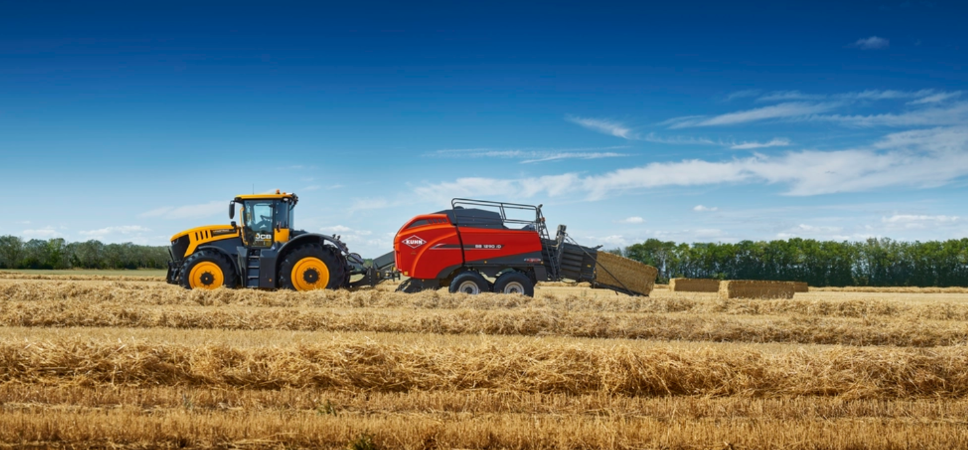
Why Correct Tire Pressure Increases Crop Yields: The Soil Compaction Connection
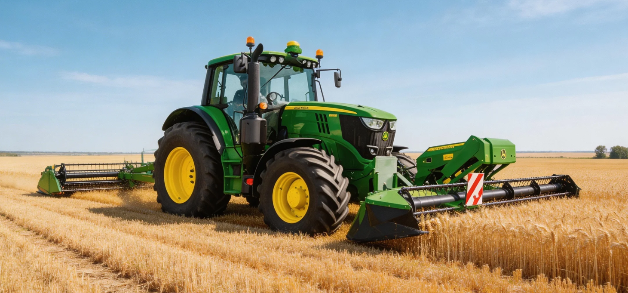
For modern farmers, every decision is ultimately measured by its impact on yield. Yet one of the most influential factors—tire inflation pressure—is often overlooked or misunderstood. The connection between tire pressure and crop productivity lies beneath the surface, in the complex world of soil physics. When heavy machinery traverses fields, the pressure exerted through tires can either preserve or destroy the soil structure that crops depend on. This article explores the critical relationship between tire inflation pressure, soil compaction, and ultimately, your bottom line.
Understanding Soil Compaction: The Hidden Yield Robber
Soil compaction occurs when soil particles are pressed together, reducing pore space and increasing density . This isn't merely a soil structure issue—it's a direct threat to crop performance. Research shows that reduced crop yield due to soil compaction reportedly falls within the range of 5-75% , depending on severity and crop type .
When soil becomes compacted, the consequences cascade through the growing season:
-
Root growth restriction: Roots struggle to penetrate dense soil layers, limiting access to water and nutrients
-
Reduced water infiltration: Compacted soil sheds water rather than absorbing it, increasing runoff and erosion
-
Poor aeration: Essential oxygen exchange for root respiration is compromised
-
Impaired nutrient uptake: Even available nutrients remain inaccessible to stressed root systems
A study on maize demonstrated that compaction stress reduced root length, root surface area, and root dry weight, along with root dehydrogenase activity and absorption capacity -5. These below-ground limitations directly translated to reduced photosynthetic parameters and dry matter accumulation above ground.
The Tire Pressure Mechanism: How Inflation Affects Compaction
The physics is straightforward: tire inflation pressure directly influences the contact pressure between tire and soil. Higher inflation pressure concentrates the machine's weight over a smaller footprint, increasing stress on the soil surface
Research using computer simulations revealed that increasing inflation pressure from 350 kPa to 650 kPa reduced the tire contact area from 0.13 m² to 0.11 m², while maximum stress levels in the tire center increased from 465 kPa to 784 kPa . This concentrated stress propagates through the soil profile, affecting layers far below the surface.
A landmark field-scale study in Illinois investigated the potential benefits of high-flexion tires operating at low tire pressure (LTP) compared to standard tire pressure (STP) on maize and soybean production . The results were striking:
-
LTP tires resulted in lower soil penetrometer resistance across three tillage systems
-
Plant establishment and plant population per hectare improved significantly
-
Maize grain yield increased by 4.31% (15.02 Mg ha⁻¹) and 2.70% (14.76 Mg ha⁻¹) in 2017 and 2018, respectively
-
Soybean yield increased by 3.70% (4.25 Mg ha⁻¹) in 2018
These yield improvements came from nothing more than optimizing tire pressure—no additional inputs, no new varieties, just smarter equipment management.
The First Pass Phenomenon
Timing matters as much as pressure. Research consistently shows that 70-80% of soil compaction occurs during the first passage of agricultural machinery . This means that initial field entry with improperly inflated tires can inflict lasting damage that subsequent passes compound.
Studies on tractor chassis compaction revealed that the highest compaction was caused by the first pass, while higher tractor weight during subsequent passes had a smaller effect . Critically, reducing tractor tire pressure to 0.15 MPa resulted in a 16% reduction in soil compaction .
Beyond Pressure: The Load Factor
While inflation pressure is critical, it's not the only variable. Research indicates that dynamic load and number of passes increase soil stress exponentially, while inflation pressure increases stress linearly . Axle load and number of tire passes proved to be the most significant parameters affecting soil compaction in clay soils .
This means that managing tire pressure is most effective when combined with:
-
Minimizing axle loads where possible
-
Reducing unnecessary passes
-
Using flotation tires or tracks for sensitive operations
-
Avoiding fieldwork when soils are wet and vulnerable
Practical Recommendations for Yield Protection
The research supports clear, actionable guidelines for protecting yield through tire pressure management:
| Practice | Benefit | Supporting Evidence |
|---|---|---|
| Use low-pressure tire systems | Reduces penetrometer resistance, improves plant establishment | 4.31% maize yield increase in Illinois trials |
| Maintain recommended pressures | Prevents excessive contact pressure | Stress at 10-30 cm depth increases 5% with over-inflation |
| Consider high-flexion (IF/VF) tires | Allow lower pressures at same load capacity | Documented benefits in Midwestern US agriculture |
| Monitor first passes carefully | 70-80% of compaction occurs on initial entry | Critical timing for pressure management |
| Adjust for soil conditions | Reduce pressure in wet or vulnerable soils | 16% compaction reduction at 0.15 MPa pressure |
The Economic Case
The financial impact of compaction extends beyond immediate yield loss. Studies estimate average financial losses due to soil compaction at 49 euros per hectare per year in Ukraine and 13 euros per hectare per year in Lithuania . In Canada, compaction from heavy tanker operations on wet soil cost 30 to 300 dollars per hectare .
When a 4.31% maize yield increase is achievable simply through correct tire pressure, the return on investment in pressure management systems becomes compelling. For a 100-hectare maize operation yielding 15 Mg/ha, that represents an additional 64.5 Mg of grain annually.
Conclusion: Pressure Management as Precision Agriculture
Correct tire inflation pressure is not merely maintenance—it is a precision agriculture tool with measurable yield impacts. The evidence is clear: lower, properly managed tire pressures reduce soil compaction, improve root growth and plant establishment, and consistently deliver higher yields in both maize and soybean production.
As equipment continues to grow heavier, the importance of managing how that weight contacts the soil only increases. Farmers who treat tire pressure as a variable input—adjusting for load, soil conditions, and field operations—will capture the dual benefits of protected soil structure and enhanced crop productivity. The connection between tire pressure and yield is real, measurable, and too significant to ignore.
Is Your Tire Wear Normal? A Visual Guide to Common Agricultural Tire Wear Patterns
Paddy vs. Dry Land Tires: Why You Should Never Mix Them