
Hydraulic Hose Fitting Failure: Causes, Prevention, and Best Practices
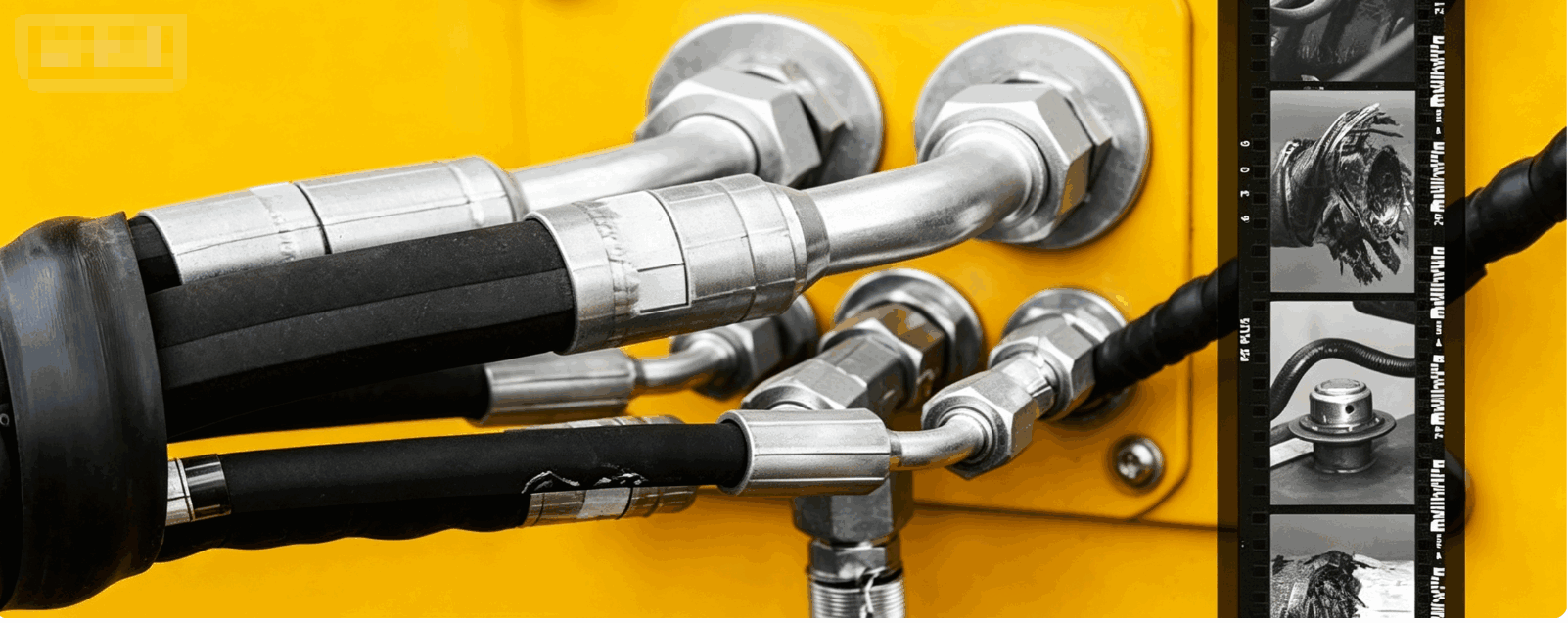
1. Introduction
Hydraulic hose failures are among the most common—and most dangerous—problems in fluid power systems. While hoses can fail anywhere along their length, the overwhelming majority of catastrophic failures occur at or near the fitting. A hose bursting mid‑span is dramatic, but a fitting blow‑off—where the hose violently detaches from its coupling—can be catastrophic, spraying high‑pressure fluid and creating extreme safety hazards.
Understanding why hoses fail at fittings is essential for prevention. The three primary culprits are crimping errors, vibration, and pressure peaks. Each attacks the hose‑fitting interface differently, but all share a common trait: they are largely preventable with proper practices.
2. Crimping: The Foundation of Fitting Integrity
The crimp is the heart of the hose assembly—the point where the mechanical strength of the fitting is permanently joined to the hose body. This connection must withstand pressure, vibration, and flexing. When the crimp is flawed, failure is almost inevitable.
Under‑Crimping (The Most Common Cause)
When a fitting's ferrule is not compressed sufficiently, the internal barbs do not bite deeply enough into the hose reinforcement. The connection relies primarily on friction. At low pressures, this may hold. But as soon as the system reaches working pressure, the force can push the hose straight out of the fitting. Even minor gaps allow movement and degradation over time. An under‑crimped assembly is a ticking time bomb.
Over‑Crimping (The Hidden Danger)
Over‑crimping is equally problematic. Excessive force crushes the hose and can fracture the high‑tensile steel wire reinforcement inside. These wires give the hose its pressure rating—damaging them creates a severe weak point. Over‑crimping can also restrict fluid flow and distort the fitting stem. The connection may hold temporarily, but under pressure spikes and flexing, the damaged wires fatigue and break, leading to sudden failure.
The Crimp Tolerance Window
A deviation of just 0.1 mm in the final crimp diameter can have severe consequences. Manufacturers specify precise crimp diameters, often to fractions of a millimetre. Using mismatched hose and fitting brands is a critical error—each manufacturer engineers their products as a matched system, and mixing them creates an unvalidated assembly with an unknown pressure rating.
3. Vibration: The Silent Aggressor
Vibration is one of the most overlooked causes of fitting failure. If hoses are not properly supported, vibration can cause fittings and flanges to loosen. This is especially problematic in high‑vibration environments like excavators, loaders, punch presses, and industrial machinery.
How Vibration Destroys Fittings
Vibration causes metal fatigue in fittings, hose cracking at the ferrule, and loosening connections. Constant movement at the crimp interface gradually weakens the mechanical grip, allowing micro‑movement that leads to wear, leakage, and eventual blow‑off. Loose or improperly torqued fittings are particularly vulnerable.
Prevention Through Support
Clamps and brackets reduce stress on fittings and support heavy hoses as fluid pressurizes. Unsupported long spans allow hoses to vibrate and fatigue. Proper clamping within 6 inches (15 cm) of fittings is a critical best practice. Hoses that are too short or twisted place additional stress on fittings, accelerating vibration damage.
4. Pressure Peaks: The Sudden Killer
Pressure spikes—also called hydraulic shock or water hammer—occur when fluid flow is abruptly stopped or changed. Rapid valve closures, pump surges, and sudden actuator stops can generate pressure spikes far exceeding the system's normal operating pressure.
The Damage Mechanism
Even if working pressure is within limits, transient spikes can exceed the hose's rating. These spikes stress the reinforcement and the crimp connection. In one documented case, a pressure spike split the ferrule itself. Hoses must be rated for dynamic load, not just static pressure.
Warning Signs and Solutions
Pressure spike failures typically appear as sudden bursts near the fitting during heavy cycles. Solutions include checking relief valve settings, installing pressure dampers or accumulators, and verifying that hose pressure ratings exceed peak pressures. SAE J1273‑2021 emphasizes that hose selection must account for surge, dynamic, and intensified pressures.
5. Comprehensive Prevention Strategy
| Failure Cause | Prevention Measure |
|---|---|
| Under‑crimping | Follow manufacturer's crimp spec; verify crimp diameter |
| Over‑crimping | Use calibrated equipment; never exceed specified diameter |
| Mismatched components | Use matched hose and fitting brands only |
| Vibration | Install proper clamps and supports; secure within 6″ of fittings |
| Pressure spikes | Install accumulators or dampers; verify dynamic pressure rating |
| Improper routing | Respect minimum bend radius; avoid sharp bends near crimp |
| Inadequate training | Train operators on crimping machines; verify competency |
6. Conclusion
Hydraulic hose failures at fittings are rarely caused by defective components. They are almost always the result of human error—incorrect crimping, inadequate support, or failure to account for pressure spikes. The crimp is the critical interface between hose and fitting; under‑crimping creates a blow‑off risk, over‑crimping damages reinforcement, and mismatched components create unknown failure points. Vibration loosens connections and fatigues metal. Pressure spikes exceed design limits. By addressing these three root causes with disciplined practices—correct crimping, proper support, and dynamic pressure rating—you can eliminate the majority of fitting failures and dramatically improve hydraulic system reliability.
Garbage Truck Hydraulic Hoses: Applications, Types, and Maintenance Guide
Hydraulic Hose Energy Efficiency: How Selection and Design Impact System Performance


