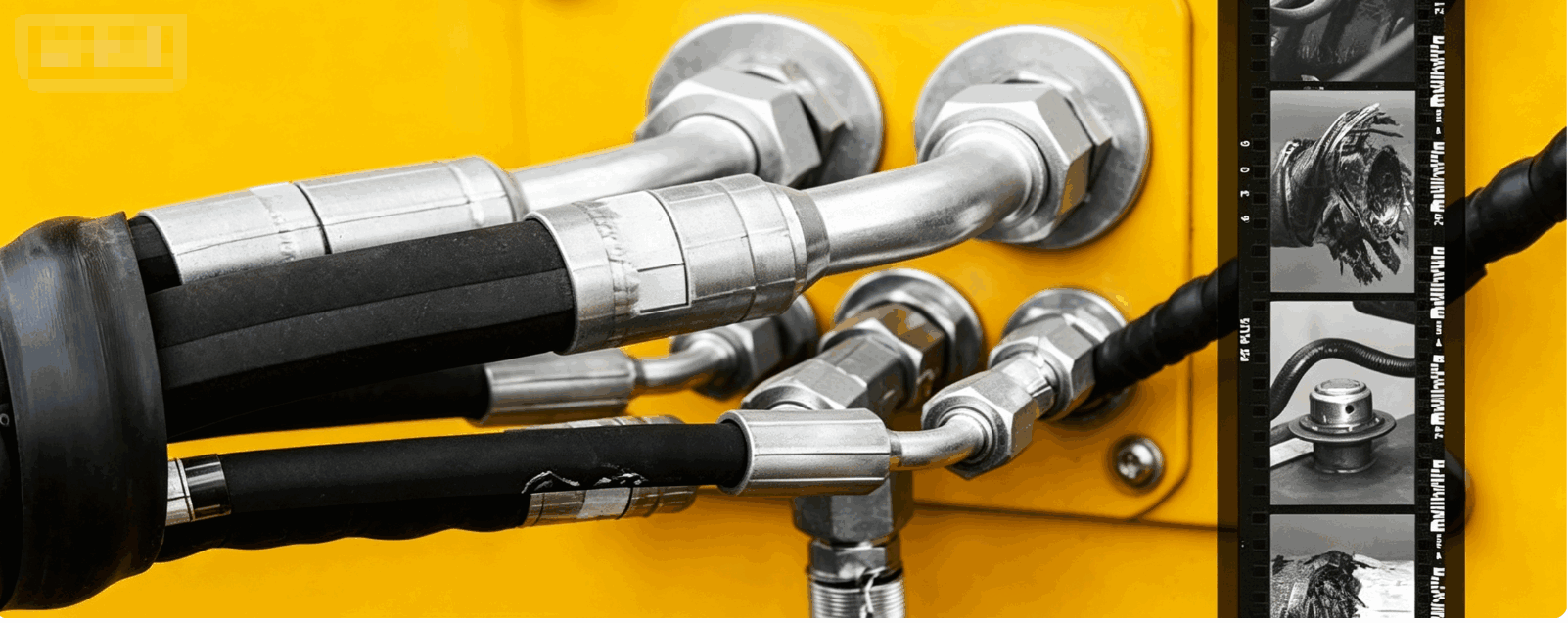
Offshore Hydraulic Hose Selection: Corrosion Resistance for Lifting and Handling Equipment

- 1. Why Offshore Environments Demand Specialized Hoses
- 2. Key Materials for Corrosion-Resistant Offshore Hoses
- 3. Hose Construction & Design Features
- 4. Industry Standards & Certifications
- 5. Selecting the Right Hose for Offshore Lifting
- 6. Application Examples
- 7. Maintenance & Inspection Best Practices
- 8. Conclusion
1. Why Offshore Environments Demand Specialized Hydraulic Hoses
Offshore lifting and handling operations—whether on oil and gas platforms, wind turbine installation vessels, or floating production storage and offloading (FPSO) units—place extraordinary demands on hydraulic systems. The combination of saltwater corrosion, constant dynamic motion, extreme temperature fluctuations, and high-pressure requirements makes standard industrial hoses entirely unsuitable for marine environments. A hose that performs reliably in a factory or on land can fail catastrophically offshore within months if not properly specified for marine conditions.
Marine and offshore hydraulic systems operate in one of the most hostile locations for hose construction materials. The challenges are multifaceted and relentless:
- Saltwater Corrosion: Seawater is highly corrosive to standard steel reinforcements and fittings. Salt spray accelerates rust formation on exposed braids and fittings, compromising structural integrity.
- Dynamic Loading: Offshore lifting operations involve constant vessel motion, wave-induced movement, and cyclic loading that fatigues hose reinforcement layers over time.
- UV Radiation: Continuous sunlight exposure degrades standard rubber covers, causing cracking and loss of flexibility.
- Temperature Extremes: Offshore environments range from freezing conditions in northern seas to high temperatures near engine rooms and hydraulic power units.
- Abrasion and Mechanical Stress: Hoses rub against deck edges, handling equipment, and other surfaces during lifting operations, accelerating cover wear.
Standard hydraulic hoses are not designed to withstand these combined forces. Offshore operations require specialized materials, reinforcements, and protective features to ensure safety and reliability.
2. Key Materials for Corrosion-Resistant Offshore Hydraulic Hoses
The material selection for offshore hydraulic hoses is critical to performance and longevity. Common materials include stainless steel, PTFE (polytetrafluoroethylene), and specialized rubber compounds.
Inner Tube Materials
| Material | Key Properties | Best For |
|---|---|---|
| Nitrile (NBR) | Oil-resistant, good abrasion resistance | Petroleum-based hydraulic fluids |
| HNBR (Hydrogenated NBR) | Superior oil and heat resistance, better ozone resistance | High-performance mineral oil systems |
| PTFE | Chemically inert, universal resistance, wide temperature range | Aggressive fluids, high temperatures |
| Thermoplastic (Polyamide/PA) | Excellent corrosion resistance to salt, alkali, and solvents; lightweight | Marine environments with high humidity and saline levels |
Reinforcement Materials
| Material | Key Properties | Best For |
|---|---|---|
| Stainless Steel Wire Braid | Corrosion-resistant, high strength, rust-proof | Marine and offshore applications |
| Galvanized Steel Wire | Good corrosion resistance, cost-effective | Less aggressive marine environments |
| Aramid/Kevlar® Fiber | Corrosion-proof, lightweight, high tensile strength | Extreme offshore conditions, dynamic loading |
Outer Cover Materials
| Material | Key Properties | Best For |
|---|---|---|
| Polyurethane (PU) | Abrasion-resistant, UV-stabilized, hydrolysis-resistant | High humidity, saline environments |
| Chloroprene (Neoprene) | Oil, weather, and ozone resistant | General offshore use |
| Stainless Steel Jacket | Ultimate corrosion protection | Extreme marine and chemical environments |
3. Hose Construction and Design Features for Offshore Lifting
Corrosion-resistant offshore hydraulic hoses incorporate several key design features that distinguish them from standard industrial hoses:
1. Reinforcement Layers
Offshore hydraulic hoses typically feature multiple layers of high-tensile steel wire braids or spirals to provide structural integrity under high pressure. For ultra-high-pressure applications (up to 6,000 psi or more), spiral-wound designs are common. Stainless steel braiding provides excellent corrosion resistance while maintaining the necessary burst strength.
2. Anti-Corrosive Coatings
Many offshore hoses feature specialized coatings on reinforcement wires and fittings to prevent rust formation. Some hoses incorporate conductive layers to prevent static buildup in flammable environments.
3. Protective Outer Covers
The outer cover serves as the first line of defense against abrasion, saltwater, and UV radiation. High-quality offshore hoses use abrasion-resistant compounds like chloroprene or polyurethane, often with anti-kink properties. The OL7 Marine Series from ZEC, for example, features an anti-abrasion polyurethane cover stabilized against UV rays and resistant to hydrolysis and micro-organisms, making it suitable for outdoor applications in environments with high humidity and saline levels.
4. Fitting Protection
Corrosion-resistant fittings are essential for offshore applications. Stainless steel fittings—particularly marine-grade 316 stainless—offer superior corrosion resistance and are widely used in shipbuilding and offshore platforms. Dezincification-resistant brass (DZR) fittings are also used for seawater exposure applications.
4. Industry Standards and Certifications
Offshore hydraulic hoses must meet stringent international standards to ensure safety and reliability. Key standards include:
| Standard | Scope | Application |
|---|---|---|
| API 17K | Specification for bonded flexible pipes | Subsea and marine production applications |
| API 17E / ISO 13628-5 | Subsea umbilical and hose systems | Offshore control systems |
| ISO 6805 | Offshore hose standards | General offshore hydraulic applications |
| EN 856 | High-pressure hydraulic hoses | European offshore equipment |
| DNV and Lloyd's Register | Type approval for marine use | Vessel and platform installations |
| GMPHOM 2009 | Guide for marine petroleum hoses | Offshore oil transfer operations |
API 17K certification is one of the most demanding in the field of marine hoses, validating that hoses withstand high pressures, dynamic loads, and extreme operating conditions while meeting strict design requirements.
5. Selecting the Right Hose for Offshore Lifting Applications
When specifying corrosion-resistant hydraulic hoses for offshore lifting and handling, consider the following factors:
- Operating Pressure and Impulse Cycles: The hose must exceed maximum operating pressure, including pressure spikes. High-impulse applications require hoses with superior fatigue resistance.
- Temperature Range: Offshore hoses typically operate between -40°C and +120°C. For low-temperature operations, thermoplastic hoses like the OL7 Marine Series offer good flexibility down to -54°C.
- Fluid Compatibility: The inner tube must be compatible with the hydraulic fluid. For demanding offshore applications, PTFE hoses with stainless steel braid are selected for their resistance to chemicals, temperature extremes, and ageing.
- Flexibility and Bend Radius: Hoses used on floating platforms require enhanced flexibility to endure constant movement. A hose that is too rigid will cause stress at connection points, leading to premature failure.
- Abrasion Resistance: Offshore lifting operations subject hoses to constant rubbing against deck edges and equipment. Hoses with polyurethane covers or additional protective sleeving are recommended.
- Certifications: Ensure the hose meets applicable standards (API, DNV, Lloyd's Register) for your region and application.
6. Application Examples
| Equipment | Recommended Hose Type | Key Considerations |
|---|---|---|
| Offshore Cranes | Thermoplastic with stainless steel braid; PTFE with stainless braid | High pressure, constant dynamic loading, corrosion resistance |
| Knuckle Boom Cranes | OL7 Marine Series or equivalent | Low-temperature flexibility, UV resistance, hydrolysis resistance |
| Subsea Control Systems | API 17K certified hoses | High pressure, crush resistance, long-term subsea exposure |
| FPSO Loading/Unloading | Kleline Dual Carcass hoses | Corrosion-free, lightweight, flexible |
| Hydraulic Power Units (HPUs) | SAE 100R12/R13 with corrosion-resistant cover | High impulse, high pressure, compact installation |
7. Maintenance and Inspection Best Practices
Even the best corrosion-resistant hoses require regular inspection and maintenance to ensure long-term reliability:
- Conduct Visual Inspections: Look for cover damage, cuts, bulges, leaks, or signs of abrasion. Any indication of rust patches on fittings should be addressed immediately.
- Check Fittings: Inspect for corrosion, pushback, or pull-out. Corrosion of hose connections is a common failure point in marine environments.
- Monitor Bend Radius: Ensure hose routing does not exceed minimum bend radius, especially at fitting connections.
- Replace Proactively: Offshore hoses should be replaced at manufacturer-recommended intervals or at the first sign of reinforcement exposure.
- Document Replacements: Keep records of installation dates and inspection findings to predict replacement intervals.
8. Conclusion
Corrosion-resistant hydraulic hoses are not optional for offshore lifting and handling operations—they are a fundamental safety and reliability requirement. The combination of saltwater corrosion, dynamic loading, UV exposure, and high-pressure demands makes standard industrial hoses unsuitable for marine environments. By selecting hoses with appropriate materials—stainless steel braids, PTFE or thermoplastic tubes, and polyurethane or chloroprene covers—and ensuring compliance with standards like API 17K, DNV, and Lloyd's Register, operators can significantly extend hose service life, reduce downtime, and enhance safety. The investment in specialized offshore hydraulic hoses pays dividends in reduced maintenance costs, improved operational reliability, and protection against catastrophic failures in one of the most demanding industrial environments on earth.
SAE 100R4 Suction Hose: A Complete Guide to Specifications and Applications
Slurry Circulation Hoses: Suction vs Discharge – Design, Materials, and Selection Guide