EPDM vs NBR Hose: A Complete Guide to Rubber Material Selection for Fluids
Introduction
When selecting a rubber hose for industrial, agricultural, or hydraulic systems, the material of the inner tube—and often the cover—determines chemical compatibility, temperature range, and service life. Two of the most common elastomers are EPDM (ethylene propylene diene monomer) and Nitrile (NBR) (nitrile butadiene rubber). Though both appear similar as black rubber, their chemical resistance profiles are almost opposites. Choosing the wrong material leads to swelling, hardening, cracking, or catastrophic failure. This guide explains the key differences between EPDM and NBR hoses and helps you decide which is right for your application.
Basic Material Properties
Nitrile (NBR) is an oil-resistant synthetic rubber. Its molecular structure contains polar groups that attract hydrocarbon molecules, making it swell minimally when in contact with petroleum-based fluids. NBR is the standard material for hydraulic hoses (SAE 100R series), fuel lines, and oil-transfer hoses. Temperature range: typically -40°C to +100°C (-40°F to +212°F), with special compounds reaching +125°C.
EPDM is a non-oil-resistant synthetic rubber with excellent resistance to polar fluids, including water, steam, dilute acids, alkalis, and brake fluids. It also has superior weathering, ozone, and UV resistance compared to NBR. However, EPDM swells and degrades rapidly when exposed to mineral oils or fuels. Temperature range: -40°C to +120°C (or higher for steam: up to +150°C continuous).
Key Differences at a Glance
| Property | NBR (Nitrile) | EPDM |
|---|---|---|
| Mineral Oil & Fuel Resistance | Excellent | Very Poor (swells rapidly) |
| Water, Steam, Brake Fluid | Poor | Excellent |
| Weathering (Ozone/UV) | Poor (requires cover protection) | Excellent |
| Abrasion Resistance | Good | Fair to Good |
| Flexibility (low temp) | Good to -40°C | Good to -40°C |
| High Temp Capability | Up to 100-125°C | Up to 120°C (water/steam up to 150°C) |
| Cost | Moderate | Slightly higher for EPDM |
| Common Applications | Hydraulic hoses, fuel lines, oil transfer, pneumatic | Water hoses, steam lines, brake fluid, outdoor exposure |
Fluid Compatibility: The Deciding Factor
The most critical difference is fluid compatibility. If you are transferring or containing any petroleum-based fluid—mineral oil, diesel, gasoline, lubricating oil—NBR is required. EPDM will swell, soften, and fail within hours or days.
If you are transferring water (hot or cold), steam, diluted acids, alkalis, phosphate ester-based fire-resistant fluids, or DOT brake fluid, EPDM is the correct choice. NBR will harden, crack, and lose flexibility when exposed to these fluids.
The table below provides a quick compatibility reference:
| Fluid Type | NBR Hose | EPDM Hose |
|---|---|---|
| Mineral oil (HL/HLP) | ✅ Excellent | ❌ Severe swelling |
| Diesel / gasoline | ✅ Good | ❌ Not compatible |
| Water (ambient) | ⚠️ Marginal (cover only) | ✅ Excellent |
| Hot water (80-100°C) | ❌ Poor | ✅ Excellent |
| Steam | ❌ Not recommended | ✅ Good (special grades) |
| DOT 3/4 brake fluid | ❌ Degrades | ✅ Excellent |
| Phosphate ester (HFD-R) | ❌ Degrades | ✅ Excellent |
| Air (pneumatic) | ✅ Good (oil carryover OK) | ✅ Good but less common |
| Ozone / outdoor exposure | ❌ Poor (cracks) | ✅ Excellent (long life) |
Application Examples: Which Hose to Choose
Choose NBR Hose for:
- Hydraulic systems (mineral oil based) – SAE 100R series
- Fuel transfer (gasoline, diesel, biofuels with low ester content)
- Lubrication lines
- Oil return and drain lines
- Pneumatic lines where oil mist is present
- General oil-resistant industrial applications
Choose EPDM Hose for:
- Garden hoses, water supply lines
- Steam cleaning hoses
- Hot water heater connections
- Brake fluid lines (automotive)
- Phosphate ester hydraulic systems (fire-resistant fluids)
- Outdoor water hoses exposed to sun (EPDM resists UV)
- Chemical transfer of weak acids/bases
What About Cover Material?
The hose cover (outer layer) may be made of a different material than the tube. For outdoor equipment, even if the tube is NBR, the cover is often EPDM or neoprene to resist weathering. Conversely, a water hose may have an EPDM tube but a nitrile cover for abrasion resistance. Always check the manufacturer's layline: it will list tube and cover materials separately.
Common Mistakes
- Using a garden hose (EPDM) for oil transfer: The hose will swell and burst.
- Using a hydraulic hose (NBR) for hot water: The tube will harden and crack, causing external leaks.
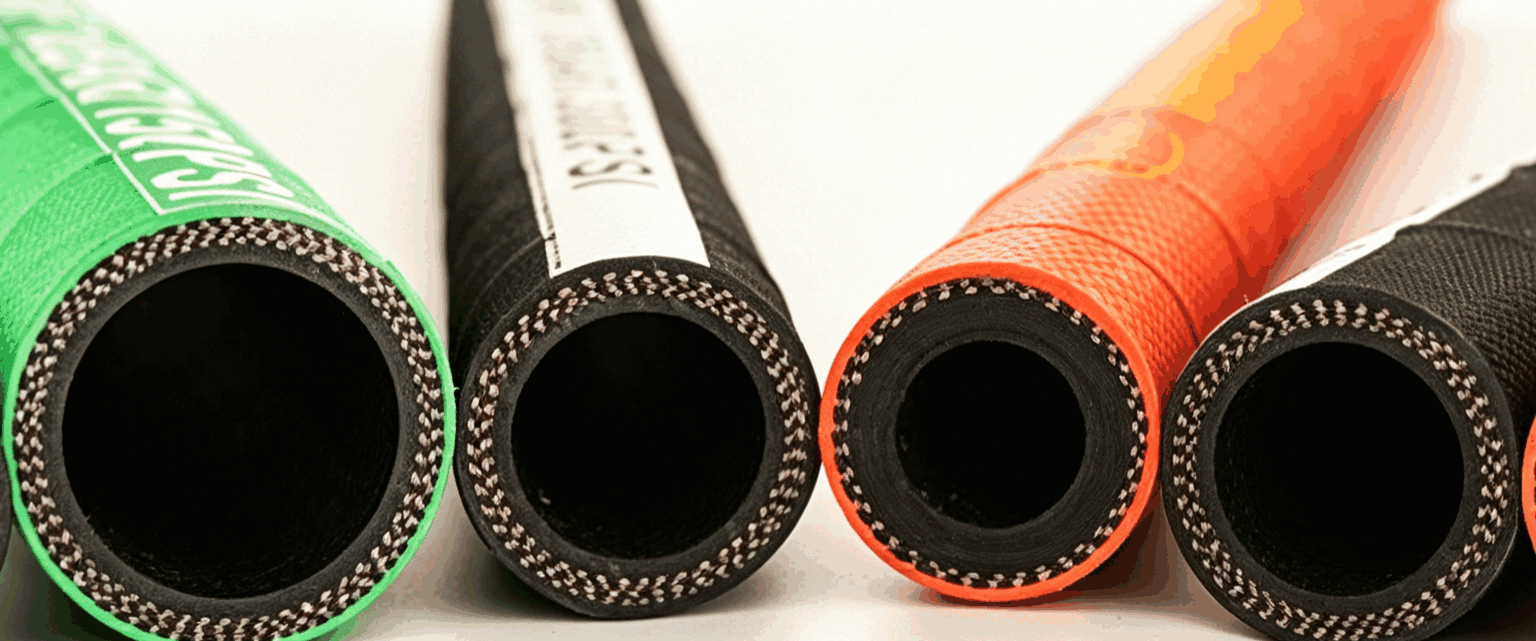
- Assuming all black rubber is the same: Color is not an indicator; read the hose marking.
- Ignoring temperature derating: Both materials lose pressure capacity at elevated temperatures.
Conclusion
EPDM and NBR hoses serve different, non-interchangeable purposes. NBR is the undisputed choice for petroleum-based fluids (oils, fuels). EPDM is required for water, steam, brake fluid, and phosphate esters. For outdoor water applications, EPDM's UV resistance provides longer life. Selecting the correct material prevents premature hose failure, safety risks, and costly downtime. Always verify tube compatibility with your specific fluid and operating temperature.
Slurry Circulation Hoses: Suction vs Discharge – Design, Materials, and Selection Guide
Sandblasting vs Pressure Washing: Choosing the Right Cleaning Method for Every Surface