The Professional's Guide to Excavator Undercarriage and Haul Truck Tires

Part 1: Defining the Roles - Undercarriage vs. Haulage
It's crucial to first distinguish between these two primary applications, as their design priorities are fundamentally different.
-
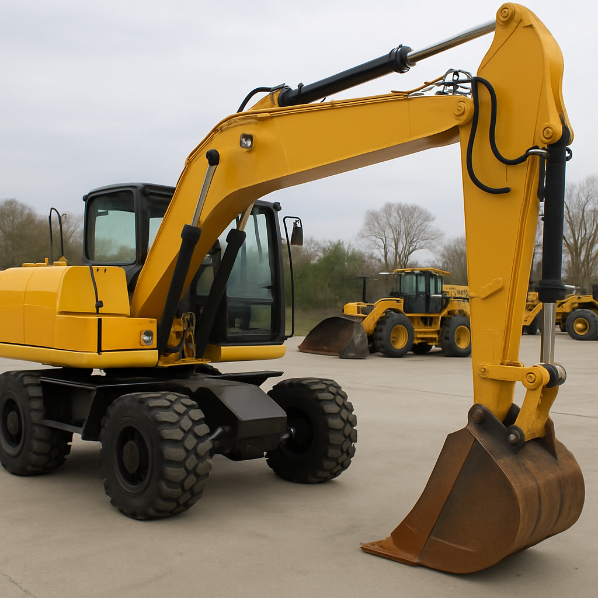
Excavator Undercarriage Tires (The Stable Platform): While large excavators predominantly use steel tracks, many compact, mid-size, and wheeled excavators rely on robust rubber tires. An excavator tyre for the undercarriage is engineered to provide a stable, level platform for digging. Its primary functions are to support the machine's static and dynamic weight during slewing and lifting, provide mobility around the site, and offer some degree of flotation on softer ground. Traction for travel is important, but stability for stationary work is paramount.
-
Excavator Truck Tires (The Load Haulers): This term typically refers to the tires on rigid or articulated dump trucks (ADTs) that haul material excavated by the digger. Excavator truck tires are designed for continuous travel under extreme load. Their core mission is to carry massive payloads over often rough haul roads at site speeds, requiring exceptional durability, heat resistance, and cut protection. The performance of these tires directly dictates haul cycle efficiency and fuel consumption.
Part 2: Key Specifications and Features Compared
Choosing the right tire requires understanding the language of its sidewall and design.
-
Size and Load Capacity: For both types, matching the tire to the load is non-negotiable. An undercarriage excavator tyre will have a size (e.g., 17.5-25) and Load Index (LI) rated for the machine's operating weight. For excavator truck tires, the LI must handle the truck's Gross Vehicle Weight (GVW)—the combined weight of the empty truck and its maximum payload. Exceeding the LI is a critical safety risk.
-
Tread Pattern & Design:
-
Excavator Undercarriage: Often uses an L-3 (ribbed) or L-4 (deep tread) pattern. This provides a smooth, stable footprint for stationary work and good traction for site mobility without excessive ground disturbance.
-
Haul Truck Tires: Utilize heavy-duty patterns like L-5 (rock/block) or specific haul road designs. These deeper, more rugged treads are built to dissipate heat, resist cuts from sharp rock, and provide the traction needed for loaded climbs.
-
-
Reinforcement and Compound: This is where duty-specific engineering shines. A high-quality excavator tyre will have reinforced sidewalls to resist damage from side-scraping and uneven ground. Premium excavator truck tires feature advanced steel cord constructions and specialized rubber compounds engineered to withstand the high operating temperatures generated by constant loaded travel, which is the leading cause of tire failure in haulage.
The table below summarizes the core differences in application and design focus:
| Aspect | Excavator Undercarriage Tire | Excavator Haul Truck Tire |
|---|---|---|
| Primary Function | Provide stable platform for digging | Transport maximum payload efficiently |
| Key Stressors | Static/dynamic load, side impacts | Heat, cuts, abrasion, constant load |
| Critical Spec | Load Index for machine weight | Load Index for GVW, Speed Symbol |
| Tread Pattern | L-3 / L-4 for stability & traction | L-5 / E-4 for heat dissipation & cut resistance |
| Reinforcement Focus | Sidewall strength | Under-tread & carcass for heat durability |
Part 3: A Practical Selection and Maintenance Guide
Follow these steps to ensure correct tire specification and longevity:
-
Identify the Exact Application: Is this tire for a wheeled excavator's stability or a dump truck's haulage? Never interchange these roles.
-
Determine the Maximum Load: For an excavator, consult the machine's specifications for operating weight. For a truck, calculate the Gross Vehicle Weight (Tare Weight + Heaped Payload Capacity).
-
Select Type & Verify Ratings: Choose the appropriate tread pattern (see table). Then, select a tire whose Load Index and size not only meet but ideally exceed your calculated maximum load for a safety margin and longer life.
-
Prioritize Proper Inflation & Inspection: This is the most important maintenance task. Underinflated tires on either machine generate excessive heat and flex, leading to premature failure. For haul excavator truck tires, this is especially critical. Conduct daily pressure checks (when tires are cold) and visual inspections for cuts, penetrations, and uneven wear.
Conclusion
The optimal excavator tyre and set of excavator truck tires are not interchangeable commodities but precision-engineered components for specific tasks. By understanding the distinct demands placed on undercarriage stability versus haulage durability, and by rigorously applying the principles of load-matching and proactive maintenance, you can significantly enhance job site productivity, improve safety, and achieve a lower cost per ton of material moved.
Backhoe Tire Sizing Guide: 14x17.5, 14.9x24, and 18.4x28 Explained
17.5R25 vs. 23.5-25: Selecting the Right OTR Tire for Your Loader