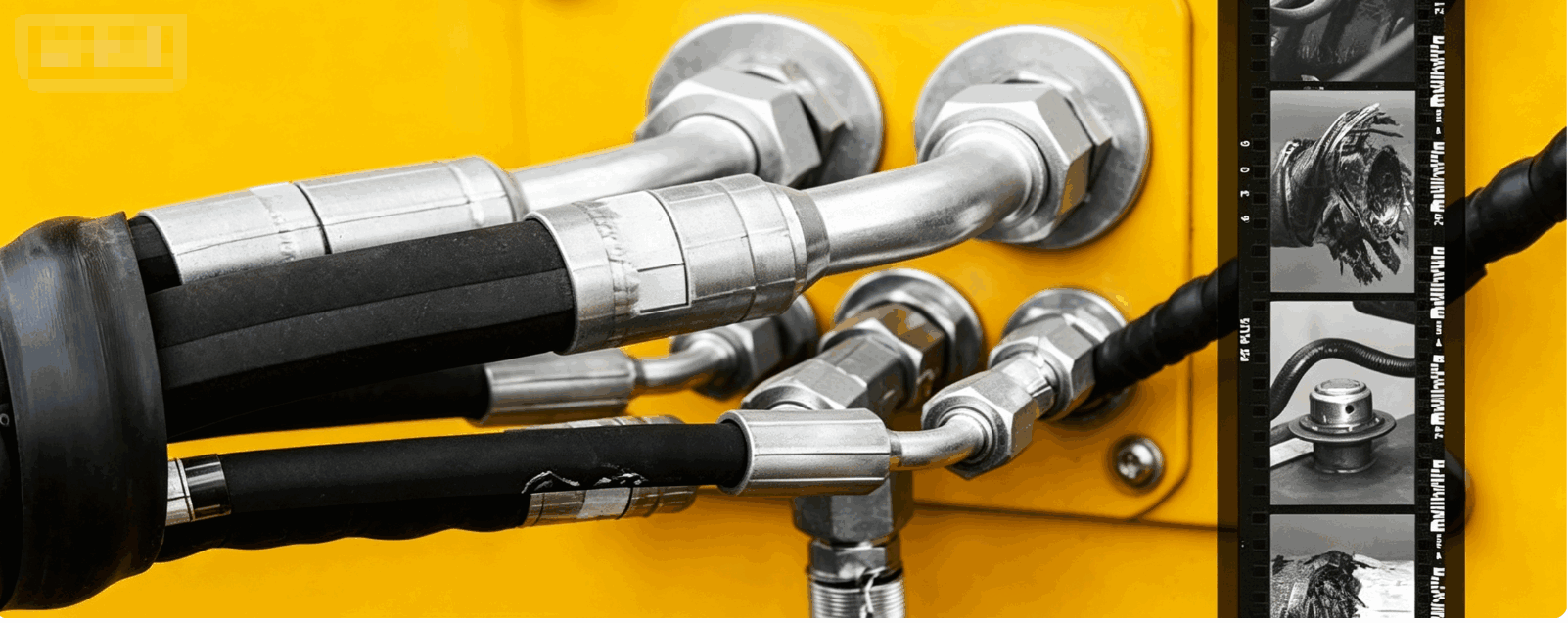
Hydraulic Hose "Health Check" Guide: How Often to Inspect and What to Look For

Hydraulic hoses are the lifelines of heavy machinery, transmitting power through pressurized fluid to move buckets, lift loads, and steer equipment. Yet these critical components are often neglected until a catastrophic failure occurs—spraying hot oil, damaging components, and halting operations. A systematic "health check" routine is the most effective way to prevent unexpected hose failures, extend service life, and maintain safe working conditions. This guide answers two essential questions: how often should you inspect hydraulic hoses, and what exactly should you look for?
Why Routine Hose Inspections Matter
A hydraulic hose failure is not just messy—it's dangerous. Fluid ejected under high pressure can penetrate skin, cause severe burns, or create slip hazards. Downtime from a burst hose can cost thousands per hour in lost production. Most failures are preventable through regular visual and tactile inspections that catch early warning signs before they become catastrophic. The investment of a few minutes per machine per shift pays enormous dividends in safety and uptime.
How Often Should You Inspect Hydraulic Hoses?
Inspection frequency depends on operating conditions, equipment age, and manufacturer recommendations. The following schedule provides a professional baseline:
| Inspection Type | Frequency | Best For |
|---|---|---|
| Operator Daily Check | Every shift / 8-10 operating hours | All equipment, especially high-hour or severe-duty machines |
| Formal Visual Inspection | Weekly or every 50 hours | General agricultural, construction, industrial equipment |
| Detailed Hands-On Inspection | Monthly or every 250 hours | Critical hoses, older machines, known problem areas |
| Annual Comprehensive Audit | Yearly or every 1,000-2,000 hours | Full system review, replacement planning, documentation |
Special Cases Requiring More Frequent Inspection:
-
Equipment operating in extreme temperatures (hot or cold)
-
Machines working in abrasive environments (sand, dust, rock)
-
High-vibration applications (hammers, compactors)
-
Hoses handling fluids at maximum pressure or temperature ratings
-
Equipment with known hose failure history
What to Inspect: The Seven Critical Checkpoints
A thorough hose inspection goes beyond a quick glance. Follow this systematic checklist:
1. Leaks at Fittings and Connections
What to look for: Wet spots, drips, crystallized fluid residue, or audible hissing around couplers, adapters, and crimped fittings.
Why it matters: Small leaks worsen rapidly. A leaking fitting loses pressure, reduces system efficiency, and eventually fails catastrophically.
Action: Tighten loose fittings to spec. Replace fittings with damaged threads or deformed sealing surfaces.
2. Cover Abrasion and External Wear
What to look for: Scuffed, worn, or missing outer rubber exposing reinforcement layers (typically wire braid or spiral).
Why it matters: Abrasion is the leading cause of cover damage. Once the reinforcement is exposed, contamination wicks into the braid, and corrosion accelerates failure.
Action: Install abrasion sleeves, spiral wrap, or hose guards in contact points. Reroute hoses to avoid rubbing against frames, edges, or other hoses.
3. Cuts, Cracks, and Weathering
What to look for: Surface cracks (checking) from ozone or UV exposure, deep cuts from sharp objects, or crazing (fine network of small cracks).
Why it matters: Small surface cracks are the first stage of rubber degradation. Deep cuts can propagate under pressure, leading to rupture.
Action: Replace hoses with cover cracks that expose reinforcement. For minor surface checking in non-critical applications, monitor closely.
4. Kinking, Twisting, and Bending
What to look for: Flat spots, visible twists along the hose length, or bends tighter than the manufacturer's minimum bend radius.
Why it matters: Kinking and twisting create stress concentrations and reduce flow. Repeated flexing at a kinked point leads to fatigue failure of the reinforcement.
Action: Reroute hoses to eliminate twisting. Replace kinked hoses—they are already damaged internally.
5. Blisters, Bulges, and Soft Spots
What to look for: Raised areas, bubble-like swellings, or noticeably soft or spongy sections when squeezed.
Why it matters: Blisters indicate separation between cover and reinforcement—often from trapped air, contamination, or chemical attack. Bulges signal reinforcement failure, and the hose is near rupture.
Action: Replace immediately. Do not operate equipment with blistered or bulging hoses.
6. Fitting Pushback or Pull-Out
What to look for: Gap between the fitting ferrule and the coupling body, or the fitting moving along the hose when tugged.
Why it matters: Pushback indicates the crimp has loosened or the hose has stretched under pressure. This is a pending blow-off.
Action: Replace the hose assembly immediately. Do not attempt to re-crimp field-attachable fittings with visible pushback.
7. Fluid Compatibility and Overheating Signs
What to look for: Hard, brittle hose cover; discoloration (especially darkening or chalking); or swelling and softening of the cover.
Why it matters: Incompatible fluids or excessive temperatures degrade rubber compounds from the inside out. Hardening indicates heat aging; swelling indicates chemical attack.
Action: Verify fluid compatibility with hose manufacturer. Check system operating temperature against hose rating. Replace and address root cause.
The "Walk-Around" Routine: A Practical Daily Checklist
Implement this simple pre-start inspection routine:
-
Walk the full length of each visible hydraulic hose
-
Run your hand along accessible hose sections (wear gloves) to feel for soft spots, bulges, or cuts you might not see
-
Check all fittings for leaks or looseness
-
Look at hose routing—is anything rubbing or pinching?
-
Start the engine and cycle hydraulics while observing hoses for unusual movement, bulging, or leaks
When to Replace: The 3 Proactive Rules
Don't wait for failure. Replace hydraulic hoses when:
-
The cover is worn through to the reinforcement anywhere
-
The hose has visible bulging, blistering, or kinking
-
The fitting shows any pushback or creep
Additionally, consider proactive replacement at time intervals based on severity:
-
Severe duty (mining, demolition, high heat): Every 1-2 years
-
Standard duty (general construction, agriculture): Every 3-5 years
-
Light duty (occasional use, climate-controlled): 5-7 years
Documentation: The Missing Link
Track inspections and replacements in a simple log. Record:
-
Hose location and part number
-
Installation date
-
Inspection dates and findings
-
Failure history
This documentation helps predict replacement intervals and identify recurring problem areas.
Conclusion: Small Effort, Big Payoff
A 10-minute daily hose inspection requires minimal effort but prevents catastrophic failures, hazardous fluid releases, and expensive downtime. Train operators to perform visual checks each shift. Conduct formal monthly inspections with a hands-on approach. Replace suspect hoses proactively rather than chasing failures. Your equipment—and your safety record—will thank you.
Hydraulic Hose Fitting Types & Application Matching: How to Prevent Leaks and Blow-Offs