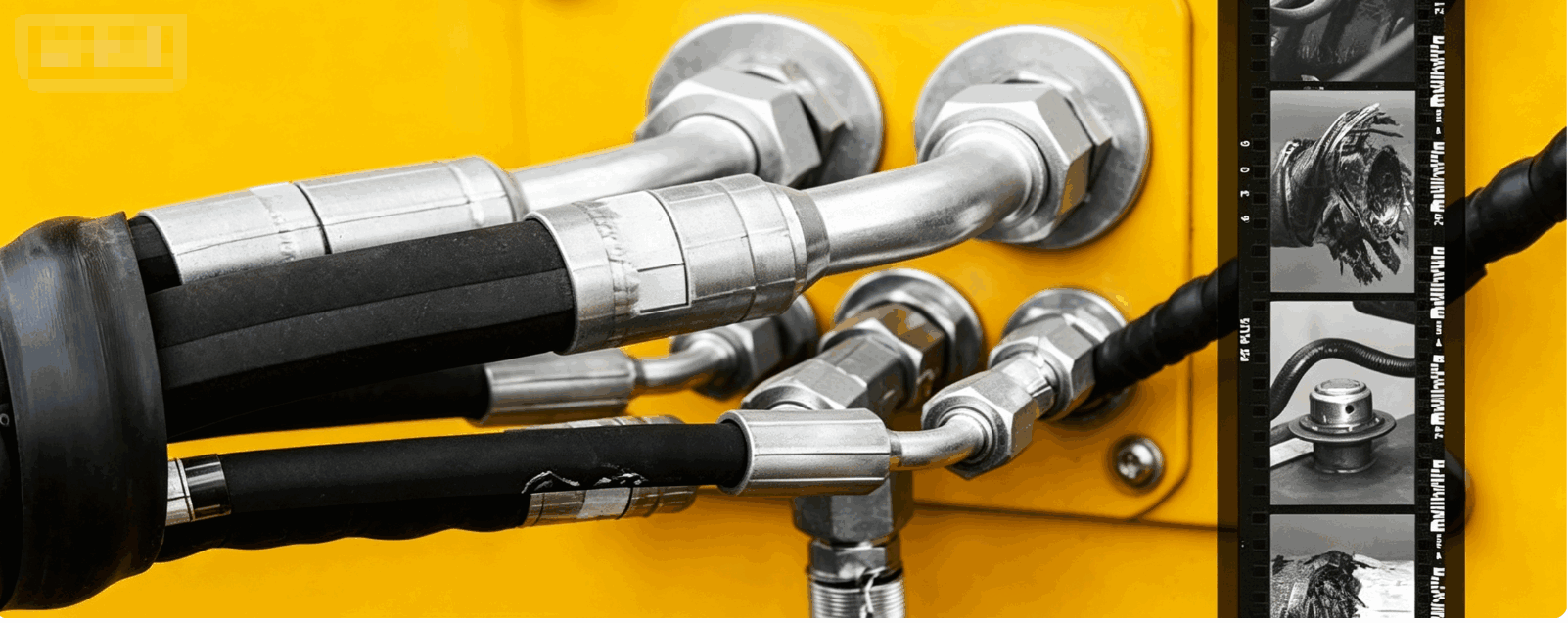
Hydraulic Hose Types & Construction: The Ultimate Guide to Selection and Safety

- 1. What Is a Hydraulic Hose?
- 2. Hydraulic Hose Construction: Three Critical Layers
- 3. Main Types of Hydraulic Hoses by Reinforcement
- 4. Key Specifications to Understand
- 5. How to Choose the Right Hydraulic Hose: Step‑by‑Step
- 6. Common Hydraulic Hose Applications by Equipment
- 7. Common Mistakes When Using Hydraulic Hoses
- 8. Hydraulic Hose Safety: DOs and DON'Ts
- 9. Conclusion
What Is a Hydraulic Hose?
A hydraulic hose is a flexible, reinforced conduit designed to carry hydraulic fluid under pressure (typically 500 to 10,000+ psi) between components in a hydraulic system. Unlike rigid piping, hoses accommodate movement, vibration, and misalignment between pumps, valves, actuators, and reservoirs.
A modern hydraulic hose is far more than a rubber tube. It is a precision-engineered composite structure consisting of three primary layers, each serving a distinct purpose:
- Inner tube: The innermost layer that carries the fluid. It must be chemically compatible with the hydraulic fluid and resist swelling, softening, or hardening. Common materials include nitrile rubber (NBR), neoprene, and fluorocarbon (FKM).
- Reinforcement: One or more layers of braided or spiral-wound wire (or textile) that provide strength to contain internal pressure. The number and type of reinforcement layers determine the hose's pressure rating.
- Outer cover: The protective outer layer that resists abrasion, cuts, oil, UV, weather, and ozone. It is typically made from synthetic rubber (e.g., neoprene, chloroprene, or polyurethane).
Hydraulic Hose Construction: Three Critical Layers
| Layer | Function | Common Materials |
|---|---|---|
| Inner tube | Carry fluid; chemical compatibility | NBR (nitrile), FKM (Viton®), neoprene |
| Reinforcement | Withstand pressure; provide burst strength | Single or multiple steel wire braids; steel wire spirals |
| Outer cover | Protect against environmental damage | Neoprene, chloroprene, polyurethane |
Main Types of Hydraulic Hoses by Reinforcement
Hydraulic hoses are classified primarily by their reinforcement construction and corresponding pressure rating. The most common industry standard is SAE J517 (or ISO 18752), which defines several hose types.
| SAE Type | Reinforcement | Typical Working Pressure (psi) | Typical Applications |
|---|---|---|---|
| SAE 100R1AT | Single steel wire braid | 1,800 – 3,000 | Low to medium pressure; general industrial and mobile hydraulics |
| SAE 100R2AT | Double steel wire braid | 3,000 – 5,000 | Medium to high pressure; construction and agricultural machinery |
| SAE 100R4 | Helix wire + textile plies | 150 – 300 | Suction and return lines (collapse-resistant) |
| SAE 100R5 | One textile braid + one wire braid | 1,500 – 2,500 | Low-pressure, tight-bend applications; power steering |
| SAE 100R12 | Four or six spiral wire layers | 4,000 – 6,000 | Very high pressure; heavy-duty construction and mining |
| SAE 100R13 | Multiple spiral wire layers | 5,000 – 10,000+ | Ultra-high pressure; critical applications |
| ISO 18752 (Constant Pressure) | Wire braid or spiral | Up to 6,000+ | International standard, performance-based grades |
Note: R12, R13, and R15 are spiral hoses that use counter-rotating wire spirals rather than braids, providing superior impulse life and higher pressure capacity for very demanding applications like excavators and large presses.
Key Specifications to Understand
When selecting a hydraulic hose, you must consider several rating parameters:
- Working Pressure (WP): The maximum continuous pressure the hose can safely handle. Never exceed this.
- Burst Pressure: Typically 4× working pressure (for safety factor). The pressure at which the hose will fail.
- Minimum Bend Radius (MBR): The tightest radius the hose can be bent without damage. Bending tighter reduces service life and can kink the reinforcement.
- Temperature Range: Standard hydraulic hoses operate from -40°C to +100°C (-40°F to +212°F). Special compounds extend these limits.
- Fluid Compatibility: The hose inner tube must be compatible with the hydraulic fluid type (mineral oil, synthetic ester, water-glycol, etc.).
How to Choose the Right Hydraulic Hose: A Step-by-Step Guide
- Determine system pressure: Measure maximum working pressure, including spikes. Select a hose with WP exceeding that figure.
- Identify the fluid type and temperature: Ensure inner tube compatibility. Check operating temperature range.
- Calculate required flow rate and select hose ID: Use velocity guidelines (pressure lines: 15‑25 ft/s; return lines: 10‑15 ft/s; suction: 2‑4 ft/s).
- Choose reinforcement type: Single braid for low pressure, double braid for medium, spiral for high pressure / high impulse.
- Select cover material: For abrasion-prone environments, choose a hose with a tough, textile-reinforced cover or add external abrasion sleeves.
- Check minimum bend radius: Ensure the hose routing will not require bends tighter than the MBR.
- Verify end fitting compatibility: Use only manufacturer-matched fittings crimped with the correct machine settings.
Common Hydraulic Hose Applications by Equipment
| Equipment | Typical Hose Type | Pressure Range |
|---|---|---|
| Skid steer loaders | SAE 100R2AT, R12 | 3,000 – 5,000 psi |
| Excavators | SAE 100R12, R13 | 4,000 – 6,000+ psi |
| Agricultural tractors | SAE 100R1AT, R2AT | 2,500 – 4,000 psi |
| Forklifts | SAE 100R2AT, R5 | 2,000 – 3,500 psi |
| Industrial presses | SAE 100R13, R15 | 6,000 – 10,000 psi |
| Suction/return lines | SAE 100R4 (suction) | 150 – 300 psi |
Common Mistakes When Using Hydraulic Hoses
- Using the wrong hose for suction: A non-reinforced or braided-only hose will collapse under vacuum. Always use SAE 100R4 or a dedicated suction hose with helix wire.
- Exceeding minimum bend radius: This damages wire reinforcement and leads to early failure, often near fittings.
- Mixing hose and fitting brands: Crimp specifications are brand-specific. Intermixing often causes leak or blow-off.
- Ignoring hose routing: Hoses should not rub against each other or machine frames. Use clamps, spiral wrap, or abrasion protectors.
- Forgetting to check compatibility with new fluids: Bio‑degradable hydraulic fluids may require different tube compounds (e.g., polyester or polyamide).
Hydraulic Hose Safety: DOs and DON'Ts
DO:
- Inspect hoses daily for leaks, bulges, cuts, or abrasion.
- Replace hoses at recommended intervals or at first sign of damage.
- Use proper crimping tools and follow manufacturer specifications.
- Release pressure before disconnecting any hose.
DON'T:
- Use your hand to check for leaks (pinhole leaks can inject fluid through skin).
- Exceed the working pressure or bend radius.
- Repair a damaged hydraulic hose with tape or clamps (replace it).
- Paint hydraulic hoses (paint can hide cracking and degrade the rubber).
Conclusion
A hydraulic hose is a precision-engineered assembly of inner tube, wire reinforcement, and protective cover. Its type and construction directly determine the system's safety, efficiency, and reliability. By understanding SAE hose classifications (R1AT, R2AT, R4, R12, R13, etc.), key parameters like working pressure and minimum bend radius, and proper selection steps, you can avoid costly failures and extend equipment life. Always match your hose to the application, use compatible fittings, and inspect regularly.
How to Prevent Sharp Bends in Hydraulic Hoses: Causes, Risks, and Solutions
What is the Difference Between Suction and Discharge Hoses?