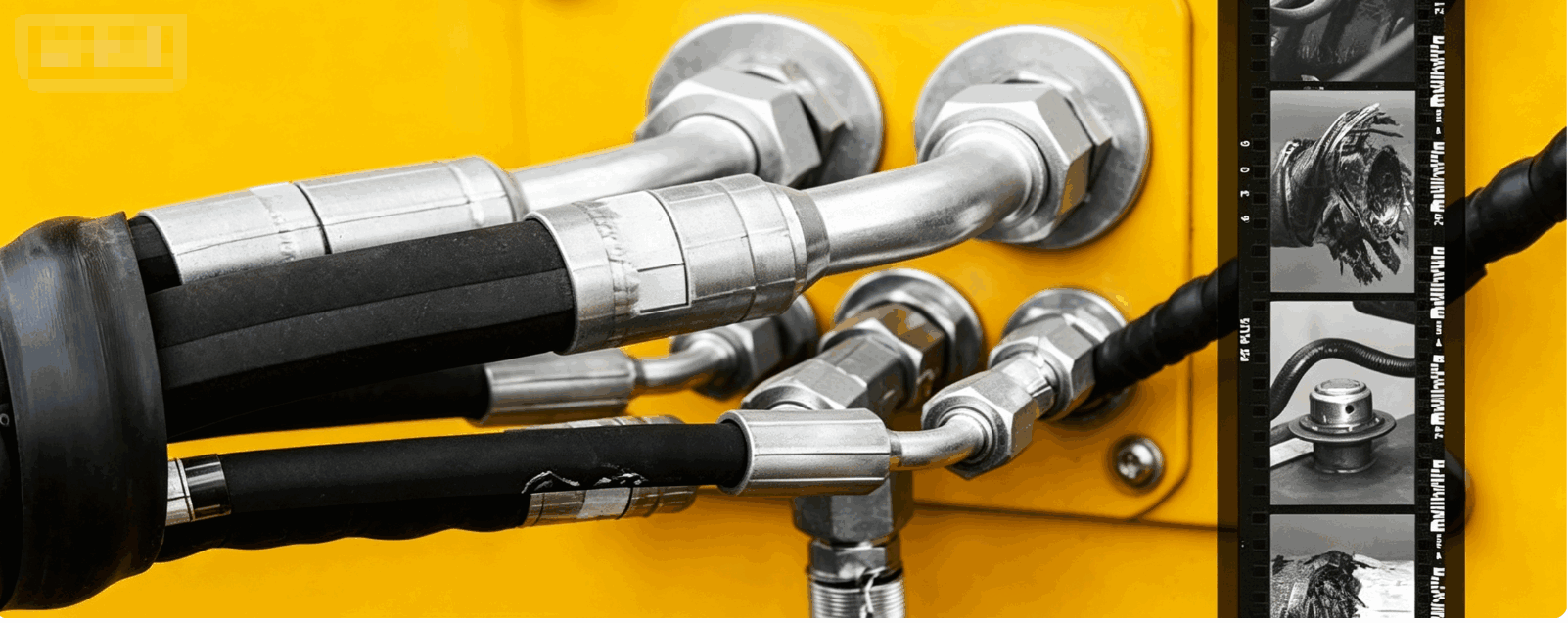
Hydraulic Hose Systems in Injection Molding and Presses: A Guide to Performance and Reliability

1. The Critical Role of Hydraulic Hoses in Manufacturing
In the world of high-volume manufacturing, injection molding machines and industrial presses are the engines of production. These powerful machines rely on complex hydraulic systems to generate the immense forces needed to clamp molds, inject molten materials, and shape metal. The unsung heroes of these systems are the hydraulic hoses, which act as the flexible arteries transmitting pressurized fluid throughout the machine. This guide provides a comprehensive overview of hydraulic hose systems in these demanding applications, covering their roles, key requirements, common pitfalls, and best practices for selection and maintenance.
In an injection molding machine, hydraulic hoses are essential for a range of critical functions. They are the lifelines for clamp, injection, core, and ejector circuits. A machine's hydraulic power unit (HPU) relies on high-pressure supply and return lines to function, while robot and end-of-arm tooling (EOAT) hydraulics depend on these hoses for precise movement. They also serve auxiliary units like unscrewing drives and mold-side actuators. The same principles apply to industrial presses, where hoses transmit power for stamping, forging, and other heavy-duty forming operations. In all these applications, hoses allow for movement between components and help reduce the damaging effects of vibration.
2. Unique Demands and Challenges of the Environment
The environment inside and around these machines is uniquely punishing, placing extreme demands on hydraulic hose systems:
- High Pressure and Fast Cycling: Systems often operate at high pressures, with injection molding machines frequently reaching up to 3,000 PSI and industrial presses demanding 6,000 PSI or higher. This is coupled with relentless, high-speed cycling that can cause fatigue.
- Vibration and Shock: The repetitive motions and high forces generate significant vibration and shock at joints and manifolds.
- Tight Routing and Confined Spaces: Hoses must be routed through incredibly tight spaces inside machine frames, cable tracks, and behind guarding.
- Elevated Temperatures: Proximity to hot barrels, manifolds, and oil reservoirs exposes hoses to elevated temperatures. Premium hoses are typically rated for a temperature range of -40°C to 120°C.
- Mixed Global Standards: A single machine can feature a mix of global thread and sealing standards, including metric, BSPP, JIS, NPT, and SAE/JIC, which complicates the selection of fittings and adapters.
3. Key Hose Types and Design Features
To survive these harsh conditions, the hoses used in these applications are highly engineered. Their construction typically consists of three key layers:
- Inner Tube: Often made of oil-resistant synthetic rubber like Nitrile (NBR) or thermoplastic to resist degradation from hydraulic fluids.
- Reinforcement: This is the critical strength layer, typically consisting of high-tensile steel wire braids or spirals. For the most demanding high-pressure, high-impulse applications, spiral-wound hoses like SAE 100R12, R13, and R15 are specified.
- Outer Cover: A tough, abrasion-resistant synthetic rubber or polyurethane cover that protects against external damage, ozone, and UV exposure.
Advanced hoses often feature compact designs for tight spaces and anti-static properties to prevent spark risks in automated environments.
4. Common Failure Modes and How to Avoid Them
Many costly failures in these environments are preventable. Common pitfalls include:
- Incorrect Sizing: Using a hose rated below the system's maximum pressure is a recipe for bursts or leaks.
- Improper Routing: Sharp bends, kinks, and exposure to heat sources accelerate wear and dramatically shorten hose life.
- Over-tightened Clamps: This can damage the hose's outer layer, creating a weak point.
- Incompatible Fittings: Using the wrong fittings or improper crimping is responsible for a significant percentage of field failures.
5. Best Practices for Design, Installation, and Maintenance
Design and Installation
- Plan the Layout: The layout of a high-pressure hose assembly directly impacts its service life. Design should prioritize functionality over appearance.
- Provide Sufficient Length: Always ensure hoses have enough slack (sag) to accommodate movement and pressure-induced length changes. A hose that's too short can pull out of its fitting or cause joint failure.
- Respect Bend Radius: Never bend a hose tighter than its minimum bend radius, and never twist a hose during installation. Twisting causes immediate and severe stress.
- Use the Right Fittings: Use angled adapters and swivel fittings to avoid tight bends and torsion at connection points. Consider using custom or compact adapters to navigate tight spaces.
- Isolate High and Low Pressure: High and low-pressure hoses should not be fixed or routed together, as their different expansion coefficients can cause damage.
Maintenance and Inspection
- Regular Inspections: Implement a routine of regular inspections for leaks, bulges, kinks, cover damage, or signs of abrasion.
- Protect Hoses: Use spring hangers or clamps to support hoses and prevent them from rubbing against equipment surfaces. Where contact is unavoidable, use protective sleeves or hoses with highly wear-resistant covers.
- Proactive Replacement: Follow industry standards, like ISO 6803, and consider replacing hoses every 2-4 years, even if no visible damage is apparent. A proactive replacement schedule is far more cost-effective than dealing with unplanned downtime.
6. Conclusion
Hydraulic hoses are not peripheral components in injection molding machines and industrial presses; they are critical to their functionality and reliability. These hoses must withstand extreme pressures, constant motion, and harsh environmental conditions. By understanding their vital roles, the specific challenges of the environment, and implementing best practices for selection, routing, and maintenance, manufacturers can significantly reduce downtime, extend equipment life, and ensure safe, continuous production. Investing in high-quality hoses and disciplined maintenance is not a cost, but a strategic investment in operational efficiency.
Pipe Thread Size Identification: A Step-by-Step Guide for Professionals
Hydraulic Hose System Design in Construction Equipment: A Complete Engineering Guide