Seeder and Planter Hydraulic Hoses: Types, Applications, and Selection Guide
1. The Critical Role of Hydraulic Hoses in Seeding Equipment
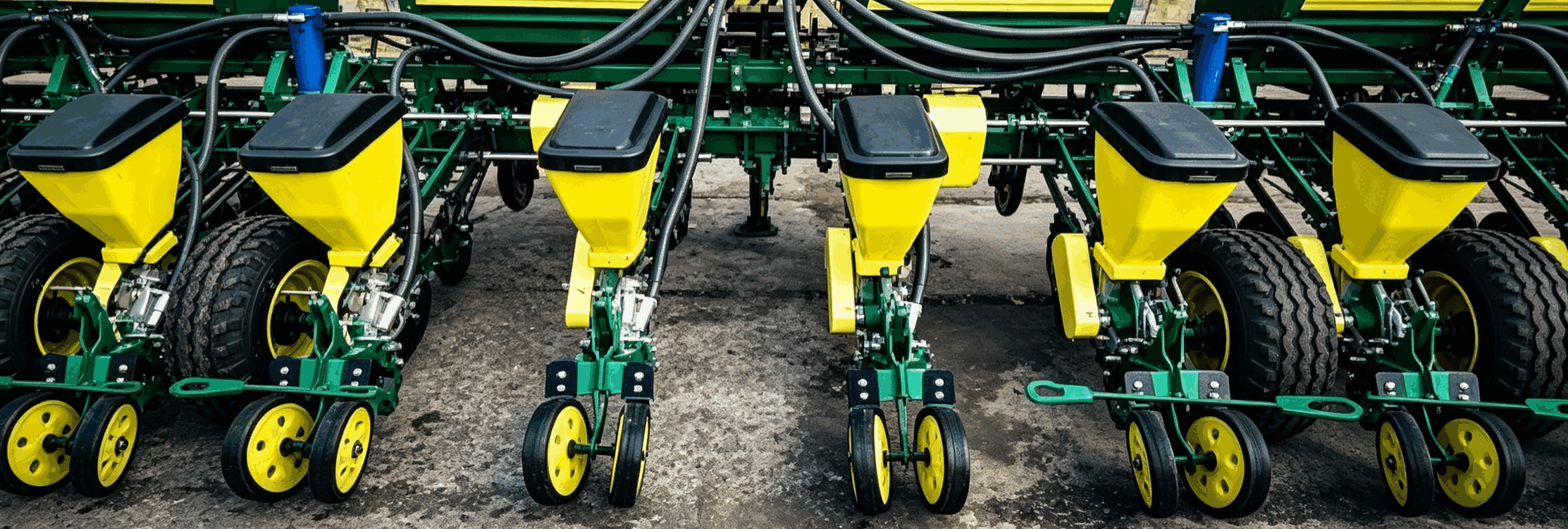
Modern seeders and planters are sophisticated machines that rely on hydraulic systems to perform dozens of critical functions simultaneously. From folding massive wing sections to controlling seed depth and driving precision seed meters, hydraulic hoses are the circulatory system that makes it all possible. A single hose failure during planting season can shut down an entire operation at the worst possible time.
Seeders and planters are complex machines with multiple hydraulic functions working simultaneously. Hydraulic hoses transfer pressurized fluid to every moving component that requires power or precise control. In a typical planter, hydraulic hoses are responsible for:
- Raising and lowering the implement — Main lift cylinders that fold and unfold wing sections and raise the frame in and out of field position
- Down-force control — Modern planters use hydraulic or pneumatic systems to apply the exact down-force needed to push row units into the soil
- Seed meter drives — Many precision planters use hydraulic motors to drive individual row unit seed meters
- Marker arms — Hydraulic-driven marker arms that score the soil for the next planting pass
- Fan drives on air seeders — Hydraulic fans generate airflow that moves seed from the central tank through distribution hoses
- Depth adjustment and section control — Automated section control systems lift and lower rows on-the-go
Because planters operate across rough terrain—over clods, through crop residue, and across uneven headlands—their hydraulic hoses are subjected to constant flexing, vibration, abrasion, and exposure to fertilizers, pesticides, and soil.
2. Types of Hydraulic Hoses Used in Seeders and Planters
Not all hydraulic hoses are suitable for seeding equipment. Selecting the correct hose type for each circuit is essential for long service life and system safety.
| Hose Type | Construction | Typical Applications in Seeders/Planters |
|---|---|---|
| SAE 100R1 (Single Wire Braid) | One steel wire braid | Marker arms, auxiliary functions, medium-pressure circuits |
| SAE 100R2 (Double Wire Braid) | Two steel wire braids | Main lift cylinders, down-force systems, high-pressure circuits |
| EN857 1SC/2SC (Compact) | Compact wire braid | Tight routing on multi-row planters where space is limited |
| Thermoplastic (SAE 100R7/R8) | Thermoplastic tube + synthetic fiber reinforcement | Precision seeding equipment, sprayer booms, weight-critical applications |
| SAE 100R4 (Suction/Return) | Helix wire + textile braid | Suction and low-pressure return lines |
Wire-Braided Hoses (SAE 100R1 / SAE 100R2) are the most widely used in agricultural applications. Single-wire braid suits medium-pressure circuits such as marker arms, while double-wire braid handles higher-pressure circuits including main lift cylinders and down-force systems. These hoses offer good flexibility and are easy to route around tight bends often found in planter frames.
Compact Wire-Braided Hoses (EN857 1SC / 2SC) have a smaller outer diameter than standard R1/R2 hoses at the same pressure rating. On modern multi-row planters with densely packed hydraulic circuits, compact hoses allow more hoses to fit in limited space without sacrificing pressure capacity.
Thermoplastic Hoses (SAE 100R7 / R8) are significantly lighter than equivalent rubber hoses—reducing machine weight and fuel consumption. Their outstanding UV resistance and flexibility at sub-zero temperatures make them the standard choice for precision seeding equipment and sprayer booms where minimizing harness weight is critical.
3. Selection Criteria for Seeder and Planter Hydraulic Hoses
When selecting hydraulic hoses for seeding equipment, consider the following factors:
1. Pressure Requirements
Every piece of agricultural machinery has a maximum operating pressure. Compare that figure to the hose's rated working pressure. Make sure the hose's working pressure matches or exceeds your machinery requirements to avoid unexpected blowouts.
2. Temperature Range
Farm work occurs in both scorching heat and cold winter mornings. Check that your chosen hose can cope with the temperatures your machinery will experience. Agricultural hoses should perform from -40°C cold-start to +100°C summer operation.
3. Environmental Factors
Hoses often encounter dirt, mud, or abrasive surfaces. Choose a cover that resists scratches, scuffs, and chemicals. Agricultural hoses require 10-year UV and ozone resistance for open-field exposure.
4. Chemical Resistance
The hose's inner tube must be compatible with the fluid it transports. Hoses are frequently exposed to fertilizers, pesticides, and moisture—ensuring fittings can withstand agricultural chemicals is essential.
5. Bend Radius
Machinery setups often have limited space. Exceeding a hose's recommended bend radius can result in kinks or weakening of the hose. Thermoplastic hoses offer excellent flexibility at sub-zero temperatures.
6. Reinforcement Layers
Hoses can feature single or multiple wire braids, or even spiral reinforcements. Multiple layers generally handle higher pressures and offer greater durability.
7. Industry Standards
Look for hoses that meet SAE, EN, or ISO standards. These certifications indicate the product has been tested for performance and safety.
4. Common Hydraulic Circuits and Recommended Hose Types
| Circuit Function | Pressure Level | Recommended Hose Type | Key Consideration |
|---|---|---|---|
| Main lift cylinders | High | SAE 100R2 or EN857 2SC | High pressure, frequent cycling |
| Wing folding | High | SAE 100R2 or thermoplastic | Tight bends at fold points |
| Down-force control | Medium-High | SAE 100R2 | Precise control, rapid cycling |
| Marker arms | Medium | SAE 100R1 | Moderate pressure, intermittent use |
| Seed meter drives | Medium | Thermoplastic (R7/R8) | Weight reduction, precise flow |
| Fan drives (air seeders) | Medium-High | SAE 100R2 | Sustained high flow rates |
| Suction/return lines | Low | SAE 100R4 | Vacuum resistance, collapse prevention |
5. Maintenance and Inspection Best Practices
Pre-Season Inspection: Before planting season begins, inspect all hydraulic hoses for cracks, leaks, swelling, blistering, or other signs of wear. Pay special attention to hoses that flex repeatedly during folding and unfolding operations.
During Operation: Monitor for signs of hose failure—visible leaks, loss of hydraulic function, or unusual noises from the hydraulic system. A hose that fails mid-season can shut down the entire machine at the worst possible time.
Proactive Replacement: Even without visible damage, hydraulic hoses have a finite service life. Consider replacing hoses every 3-5 years or at the first sign of degradation, especially on high-cycle circuits like wing folding and down-force control.
Proper Routing: Ensure hoses are secured with appropriate clamps and routed to avoid sharp bends, chafing against metal edges, and contact with hot surfaces.
6. Conclusion
Hydraulic hoses are the lifelines of modern seeders and planters, powering everything from main lift cylinders to precision seed meter drives. The demanding conditions of agricultural planting—constant flexing, vibration, abrasion, chemical exposure, and temperature extremes—require careful selection of the right hose type for each circuit. Wire-braided hoses (SAE 100R1/R2) handle medium to high-pressure circuits, compact hoses (EN857) fit tight spaces, thermoplastic hoses (SAE 100R7/R8) offer weight savings and UV resistance, and SAE 100R4 serves suction and return lines.
By understanding the specific demands of each hydraulic function, selecting hoses that meet SAE or EN standards, and implementing regular inspection and maintenance practices, operators can prevent costly downtime and ensure reliable performance through the critical planting window.
Hydraulic Hose System Design in Construction Equipment: A Complete Engineering Guide
Hydraulic Hose Torsion Prevention: 6 Essential Steps to Eliminate Twisting and Stress