PTFE Teflon Hose for Food Processing: Hygienic Design, FDA Compliance, and Selection Guide
- 1. What Is PTFE and Why Is It Ideal for Food Processing?
- 2. Key Properties of PTFE Hoses for Hygienic Applications
- 3. Regulatory Compliance and Certifications
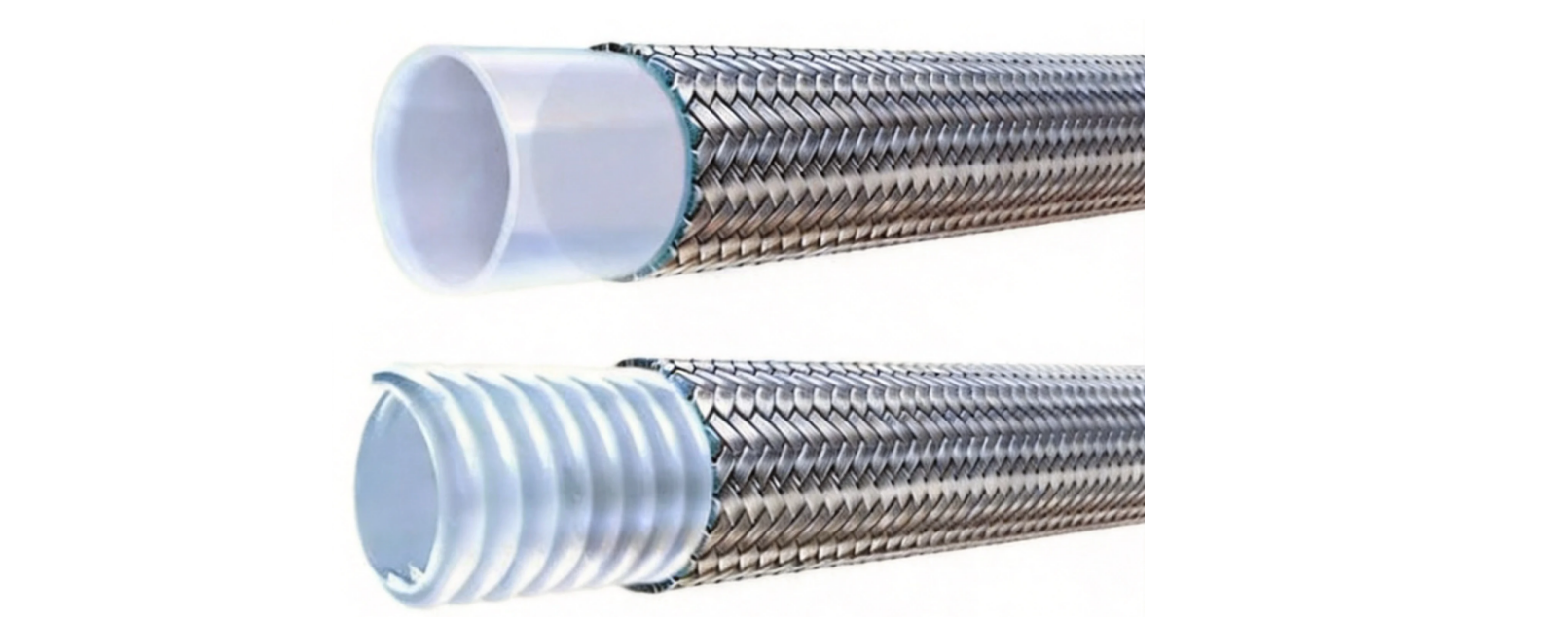
- 4. Smoothbore vs. Convoluted PTFE Hoses
- 5. Advanced Design Features: Flared and Lined End Fittings
- 6. Applications in Food and Beverage Processing
- 7. Comparison: PTFE vs. Alternative Hose Materials
- 8. How to Select the Right PTFE Hose
- 9. Conclusion
1. What Is PTFE and Why Is It Ideal for Food Processing?
In the food and beverage industry, maintaining product purity, preventing contamination, and ensuring sanitary conditions are paramount. Every component that comes into contact with food products must meet stringent regulatory standards while delivering reliable performance under demanding conditions. Among the various hose materials available, PTFE (polytetrafluoroethylene)—commonly known by the brand name Teflon®—stands out as the most widely specified material for food processing applications.
PTFE is a fluoropolymer with a unique molecular structure that gives it exceptional properties. PTFE hose is by far the most widely specified material for food processing applications of all types. From steam, beer and spirits to syrups, sauces, and even prepared meats, PTFE is utilized for transfer and equipment operation across the entire food processing spectrum.
PTFE is inherently non-reactive and will not affect the product being conveyed in any way. Unlike rubber hoses that can impart flavors or absorb product residues, PTFE is completely inert—it will not impart any color, flavor, or odor to food products. This chemical inertness ensures that the hose does not alter the taste, aroma, or appearance of sensitive food products such as dairy, wine, beer, fruit juices, and spirits.
2. Key Properties of PTFE Hoses for Hygienic Applications
Ultra-Low Coefficient of Friction
PTFE has the lowest coefficient of friction of any material used in hose manufacturing. This natural slipperiness means that foods will not stick to the inner surface of the hose. The ultra-smooth bore reduces friction, ensuring consistent flow and minimizing pressure drop. This non-stick property also prevents residue buildup, which is critical for maintaining sanitary conditions and preventing bacterial growth.
Chemical Inertness and Non-Absorption
PTFE is chemically inert and will not react with the food products it conveys. With a very low absorption rate—less than one-tenth of one percent—PTFE will not remove ingredients from the product, not even moisture. The hose will not absorb product or cleaning chemicals that could later leach into subsequent product batches. This eliminates the risk of cross-contamination between different product runs.
Exceptional Temperature Range
PTFE hoses operate across an extraordinary temperature range from -60°C to +260°C (-76°F to +500°F). This allows them to handle everything from refrigerated ingredients to high-temperature sterilization processes. The ability to withstand extreme temperatures makes PTFE ideal for both hot fill applications and steam sterilization.
Resistance to Steam Sterilization and CIP/SIP
Unlike silicone hoses, PTFE is permanently resistant to steam sterilization (SIP) and in-place cleaning (CIP). PTFE-lined hoses can withstand repeated autoclave operations and are ideal for steam or hot oil applications. The smooth bore of PTFE hoses ensures ease of cleaning and compatibility with CIP and SIP processes.
3. Regulatory Compliance and Certifications
For food processing applications, regulatory compliance is non-negotiable. PTFE hoses from reputable manufacturers meet the following key standards:
| Standard | Requirement |
|---|---|
| FDA 21 CFR 177.1550 | FDA approval for food contact applications |
| USP Class VI | Highest level of biocompatibility testing |
| EU Regulation 1935/2004 | European food contact materials regulation |
| EU Regulation 2023/2006 | Good manufacturing practice for food contact materials |
These certifications ensure that PTFE hoses are safe for direct contact with food products and meet the rigorous standards required by regulatory authorities worldwide.
4. Smoothbore vs. Convoluted PTFE Hoses
PTFE hoses come in two primary bore configurations, each suited to different applications:
| Feature | Smoothbore PTFE Hose | Convoluted PTFE Hose |
|---|---|---|
| Flow Characteristics | Uninterrupted, high flow, minimal turbulence | Slightly higher turbulence due to corrugations |
| Cleanability | Excellent; no areas for bacterial entrapment | Good; but requires more thorough cleaning |
| Flexibility | Moderate | Excellent; very flexible |
| Kink Resistance | Good | Excellent; kink-resistant |
| Best For | High-purity, sensitive products, CIP/SIP applications | Applications requiring tight bends and frequent flexing |
For hygienic food processing, smoothbore PTFE hoses are generally preferred because the seamless inner core prevents bacterial entrapment and provides uninterrupted flow. The smooth PTFE tube is food-resistant and prevents bacterial growth.
5. Advanced Design Features: Flared and Lined End Fittings
One of the most significant innovations in PTFE hose technology for food processing is the use of flared or lined end fittings. In these designs, the PTFE hose liner extends through the fitting and is flared over the face of the fitting. This provides 100% PTFE coverage on all wetted surfaces, eliminating the problem of bacterial entrapment and ensuring uninterrupted flow. The media passing through the hose contacts only the chemically resistant PTFE liner.
This design feature is particularly important in hygienic applications where even small areas of entrapment can lead to bacterial growth and product contamination.
6. Applications in Food and Beverage Processing
PTFE hoses are used across the full spectrum of food and beverage processing:
| Application | Specific Uses |
|---|---|
| Dairy Processing | Milk, cream, yogurt, cheese production lines |
| Beverage Production | Beer, wine, fruit juices, spirits, soft drinks |
| Sauces and Syrups | Viscous, sticky products that benefit from non-stick properties |
| Prepared Meats | Sausage and meat processing lines |
| Edible Oils and Fats | Cooking oil transfer |
| Steam and Hot Water | Sterilization and cleaning systems |
| Cosmetics and Pharmaceuticals | High-purity applications with similar hygiene requirements |
PTFE hoses transfer process fluids from one station to another, often replacing rigid pipework to allow relative movements between stations and avoid cracking.
7. Comparison: PTFE vs. Alternative Hose Materials
| Property | PTFE | Silicone | Rubber (EPDM/NBR) |
|---|---|---|---|
| Chemical Resistance | Excellent—inert to virtually all chemicals | Good | Variable |
| Temperature Range | -60°C to +260°C | -50°C to +200°C | -40°C to +120°C |
| Non-Stick Properties | Excellent | Moderate | Poor |
| Absorption Rate | <0.1% | Moderate | High |
| Steam Sterilization | Permanent resistance | Limited cycles | Limited |
| Flavor Imparting | None | Possible | Possible |
| Bacterial Growth | Prevents | Can support | Can support |
| Regulatory Compliance | FDA, USP Class VI, EU | FDA | FDA (limited) |
8. How to Select the Right PTFE Hose for Your Application
When selecting a PTFE hose for hygienic food processing, consider the following factors:
- Bore Type: Choose smoothbore for maximum cleanability and high-purity applications; choose convoluted for maximum flexibility and tight routing.
- Temperature Requirements: Ensure the hose's temperature rating matches your process—from cold storage to steam sterilization.
- Pressure Rating: Verify that the hose's working pressure exceeds your system's maximum operating pressure.
- End Fittings: Select flared or lined fittings for 100% PTFE wetted surfaces and maximum hygiene.
- Certifications: Confirm FDA 21 CFR 177.1550 compliance and any additional certifications required for your application.
- Cover Material: For demanding environments, consider hoses with silicone, EPDM, or stainless steel braid covers for added protection.
9. Conclusion
PTFE Teflon hoses are the gold standard for hygienic food processing applications. Their unique combination of chemical inertness, non-stick properties, exceptional temperature range, and resistance to steam sterilization makes them indispensable in dairy, beverage, sauce, and prepared food production. The availability of smoothbore designs with flared end fittings provides 100% PTFE wetted surfaces, eliminating bacterial entrapment and ensuring the highest levels of hygiene.
With FDA 21 CFR 177.1550, USP Class VI, and EU food contact certifications, PTFE hoses offer the regulatory compliance and performance reliability that food processors demand. When product purity, sanitary conditions, and operational efficiency are critical, PTFE remains the material of choice.
Mining Dump Truck Hydraulic Hoses: Applications, Selection, and Maintenance Guide
Hydraulic Hose Standards Comparison: SAE, EN, ISO – Which One Should You Use?