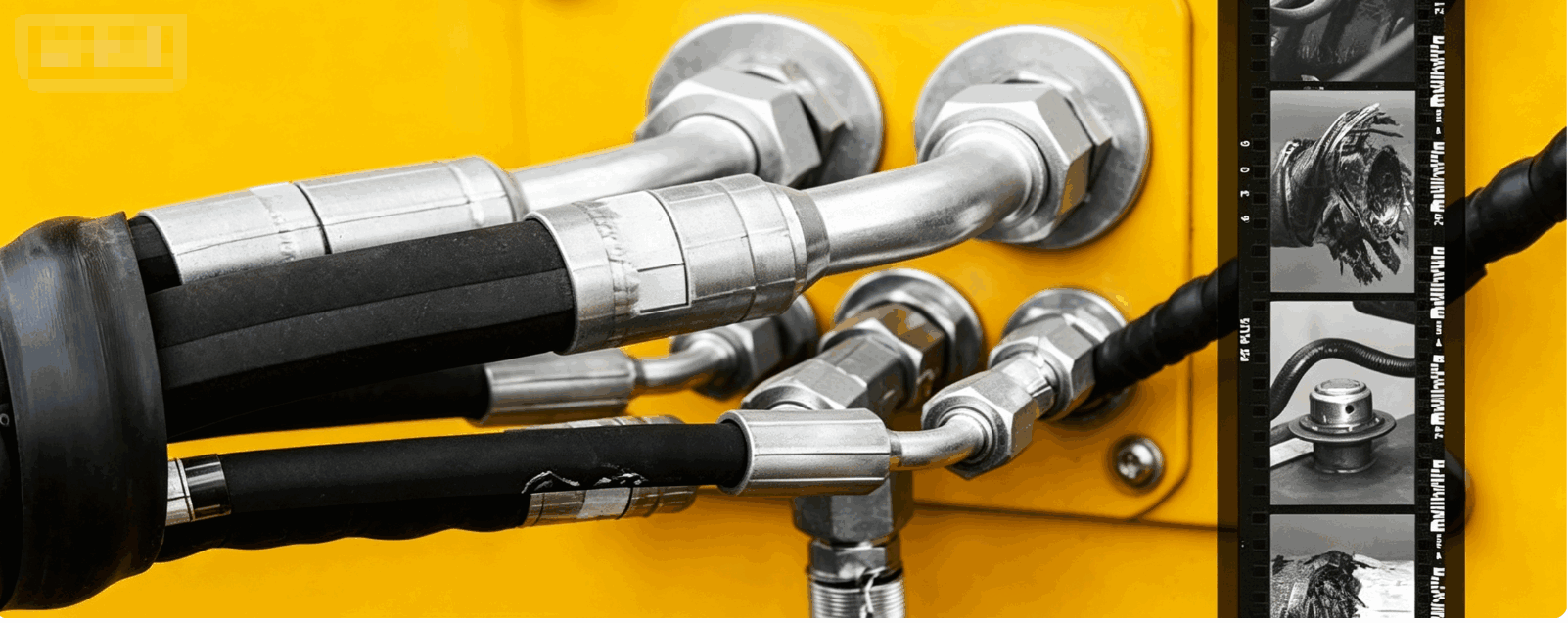
Hydraulic Hose Standards Comparison: SAE, EN, ISO – Which One to Use?
Why Hydraulic Hose Standards Exist
Hydraulic hoses must withstand extreme pressures, temperature variations, impulse cycles, and environmental exposure. Standards define:
- Construction requirements (reinforcement type, number of layers)
- Performance thresholds (minimum burst pressure, impulse test cycles)
- Dimensional tolerances (inside diameter, outside diameter, bend radius)
- Marking and identification
Using a non-standard or mismatched standard hose can lead to premature failure, safety hazards, and voided warranties.
The Three Major Standards: SAE, EN, ISO
| Standard | Origin | Primary Markets | Typical Prefix |
|---|---|---|---|
| SAE | United States (Society of Automotive Engineers) | North America, global heavy equipment | SAE 100R… |
| EN | Europe (European Norm, often CEN) | European Union, UK, many global markets | EN 853, EN 856, EN 857 |
| ISO | International (ISO) | Worldwide, increasingly dominant | ISO 1436, ISO 3862, ISO 11237 |
Crucially, many EN and ISO standards are harmonized with SAE equivalents. For example, EN 853 2SN and ISO 1436-2 are technically identical to SAE 100R2AT. Understanding these equivalences allows cross-referencing and global sourcing.
SAE Hydraulic Hose Standards (Most Common)
SAE J517 is the core document, defining multiple "100R" types.
| SAE Type | Construction | Pressure Range | Typical Application |
|---|---|---|---|
| SAE 100R1AT | Single steel wire braid | Medium (2,000–3,000 psi) | General hydraulic, return lines |
| SAE 100R2AT | Double steel wire braid | High (3,000–5,000 psi) | Construction, agriculture, mobile equipment |
| SAE 100R4 | Helix wire + textile | Low (suction) | Pump inlet, return lines |
| SAE 100R5 | One wire braid + textile cover | Medium (2,000–3,000 psi) | Tight bends, oil lines |
| SAE 100R6 | Single textile braid | Low (300–1,000 psi) | Pilot lines, drain lines |
| SAE 100R12 | Four spiral wire layers | High (4,000–6,000 psi) | Heavy construction, mining |
| SAE 100R13 | Multiple spiral layers | Very high (5,000–6,000 psi) | Large excavators, high-impulse |
| SAE 100R15 | Six spiral layers | Ultra-high (6,000–10,000 psi) | Extreme pressure applications |
EN and ISO Equivalents
The table below shows common cross-references:
| SAE Type | EN Equivalent | ISO Equivalent | Notes |
|---|---|---|---|
| SAE 100R1AT | EN 853 1SN | ISO 1436-1 1SN | Identical performance |
| SAE 100R2AT | EN 853 2SN | ISO 1436-1 2SN | Identical |
| SAE 100R12 | EN 856 4SP | ISO 3862-1 4SP | 4-spiral, high-pressure |
| SAE 100R13 | EN 856 4SH | ISO 3862-1 4SH | 4-spiral, smaller OD |
| SAE 100R4 | EN 854 1TE | ISO 11237-1 | Textile reinforced |
| SAE 100R5 | EN 855 1SC | ISO 11237-1 | Mixed textile/wire |
Important: EN 857 2SC (compact) has no direct SAE equivalent but is similar to SAE 100R16/100R17 – smaller outer diameter for tighter installations.
Key Differences to Understand
1. Nomenclature Differences
- SAE uses "100R" followed by a number (e.g., 100R2AT)
- EN uses a standard number plus "SN" (single braid) or "SN" (double braid) – e.g., EN 853 2SN
- ISO uses its own numbering but often references SAE or EN within the text
In practice, a hose labeled SAE 100R2AT can also be marked EN 853 2SN if manufactured to both standards.
2. Compact Hoses: SAE 100R16 / R17 vs. EN 857
Standard hoses (R1AT, R2AT) have relatively thick covers. Compact hoses have thinner covers and smaller outer diameters for the same inner diameter and pressure rating. SAE defines R16 and R17; EN defines EN 857 1SC and 2SC. These are widely used in tight machinery compartments.
| Compact Type | Braid Layers | Pressure Rating |
|---|---|---|
| SAE 100R16 | Two braids (compact) | Similar to R2AT but smaller OD |
| SAE 100R17 | One braid (compact) | Lower than R1AT, very small OD |
| EN 857 1SC | One braid (compact) | Equivalent to R17 |
| EN 857 2SC | Two braids (compact) | Equivalent to R16 |
3. Impulse Test Requirements
All three standards require impulse testing, but the number of cycles may differ slightly. For heavy-duty applications, verify that the hose meets the impulse requirements of your machinery manufacturer (often 400,000 to 1,000,000 cycles).
Which Standard Should You Choose?
Choose SAE if:
- Your equipment is manufactured in North America
- The machine's manual specifically calls out SAE 100R types
- You are sourcing from US-based distributors
Choose EN if:
- Your equipment is European-made (e.g., Liebherr, Palfinger, many agricultural brands)
- You need CE marking compliance for EU machinery
- Your local supplier stocks EN-marked hoses
Choose ISO if:
- You need global acceptance (ISO is recognized everywhere)
- Your company has a global procurement policy
- The hose will be used on machinery exported worldwide
In practice: For most hydraulic applications, SAE 100R2AT and EN 853 2SN are interchangeable. Similarly, SAE 100R12 and EN 856 4SP are functionally equivalent. Always confirm with the manufacturer's cross-reference guide.
How to Identify a Hose's Standard
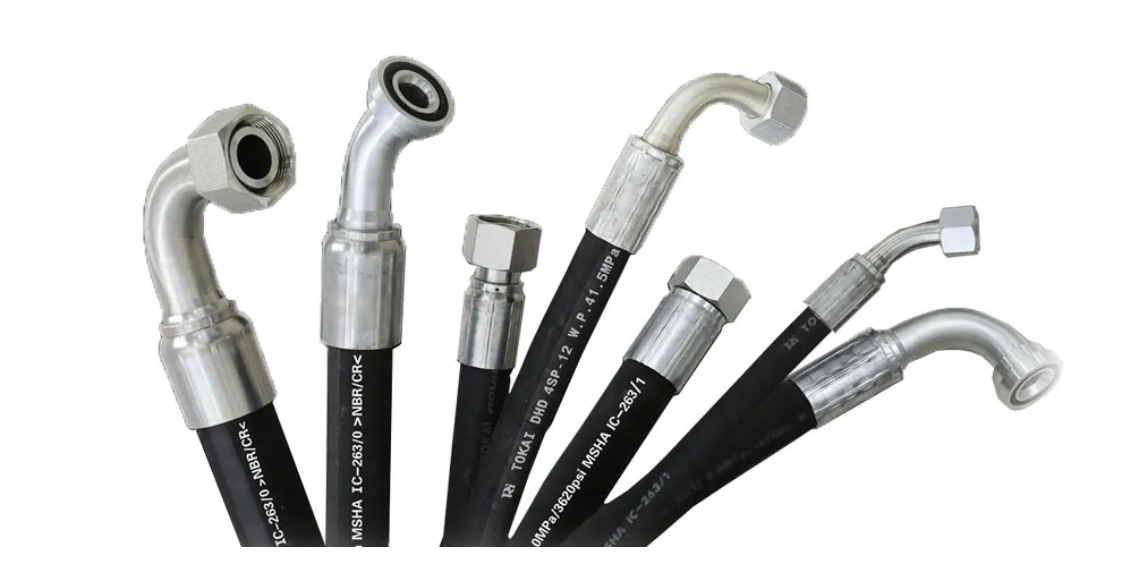
Look at the layline (printed text on the hose cover). A compliant hose will show:
- Manufacturer name or logo
- Standard and type (e.g., SAE 100R2AT, EN 853 2SN, ISO 1436-1 2SN)
- Inside diameter (e.g., 1/2″ or DN12)
- Working pressure (e.g., 4000 PSI / 27.6 MPa)
- Date code
Example: "Gates MXT SAE 100R12 EN 856 4SP 1″ WP 5000 PSI" – indicating the hose meets both SAE and EN standards.
Common Mistakes
- Assuming higher standard number means better: 100R5 is not better than 100R2; they are for different applications.
- Mixing standards without cross-reference: An EN 853 2SN hose may have slightly different dimensions than a non-equivalent SAE type.
- Ignoring compact options: Using a standard R2AT in a very tight space can exceed bend radius; use R16 or EN 857 instead.
- Using a hose without any standard marking: That is a red flag for substandard quality.
Conclusion
SAE, EN, and ISO hydraulic hose standards are largely harmonized, with direct equivalents for the most common types (R1AT/1SN, R2AT/2SN, R12/4SP, etc.). Understanding these equivalences allows you to source hoses globally with confidence. For heavy-duty machinery, always select a hose that meets or exceeds the original equipment manufacturer's specified standard. When in doubt, consult the hose manufacturer's cross-reference guide. The right standard ensures safety, performance, and compliance.
Agricultural UV-Resistant Hydraulic Hoses: Protecting Outdoor Farm Equipment from Sun Damage
Agricultural Sprayer Hydraulic Hoses: Selection, Routing & Best Practices