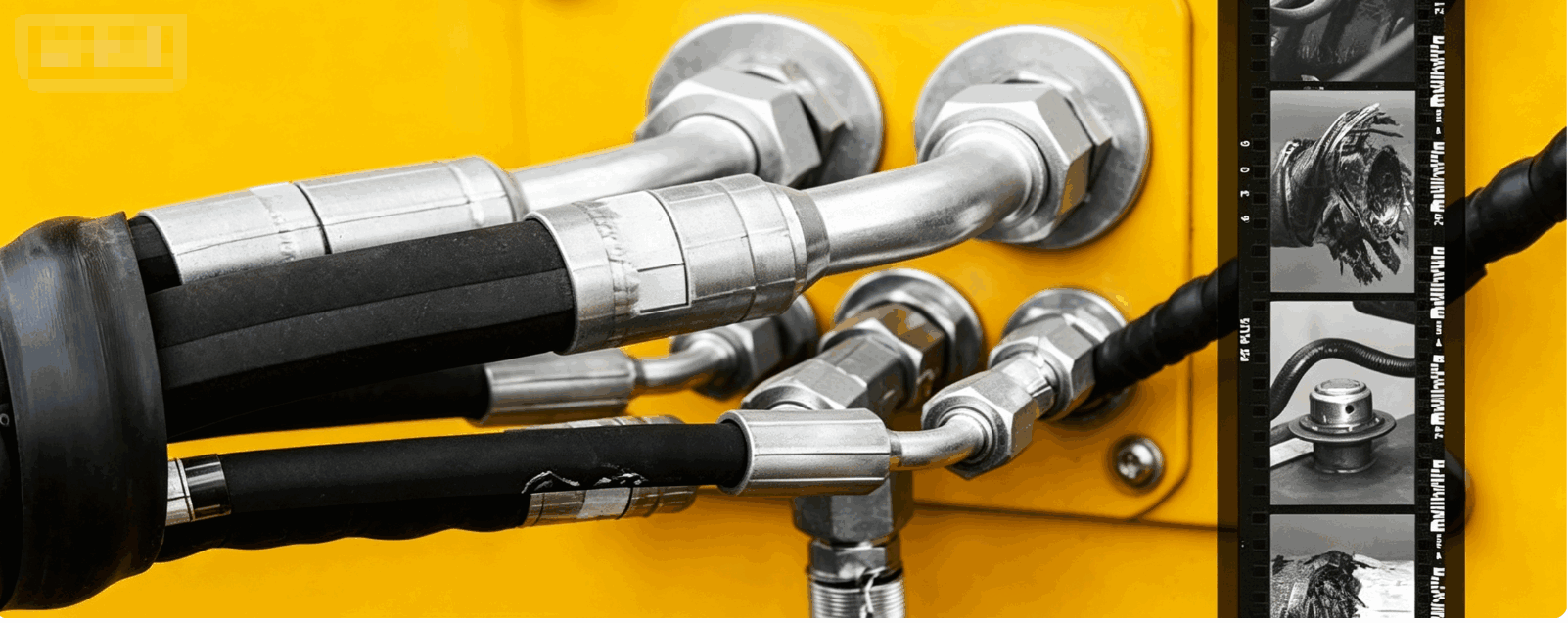
Hydraulic Hose Failure Prevention: 10 Signs Your Construction Hose Needs Immediate Replacement
- 1. Cover Wear Exposing Reinforcement
- 2. Visible Fluid Leaks at Any Point
- 3. Blisters or Bubbles on the Cover
- 4. Hard, Brittle, or Cracked Cover
- 5. Deep Cuts or Gouges
- 6. Fitting Pushback or Pull-Out
- 7. Kinks, Flattening, or Twists
- 8. Heat Damage or Discoloration
- 9. Corroded or Bent Fittings
- 10. Age Exceeds Manufacturer Recommendation
- Bonus: Performance Symptoms
- What to Do When You Spot These Signs
- Don't Take Shortcuts
- Conclusion
1. Cover Wear Exposing Reinforcement
The outer rubber cover protects the steel wire reinforcement from moisture, dirt, and abrasion. When you see fabric or steel wires peeking through a worn spot, the hose has lost its primary defense. Even a small exposed area allows water and grit to wick along the reinforcement, leading to rust and eventual burst. Replace immediately—do not patch or tape.
2. Visible Fluid Leaks at Any Point
Leaks are the most obvious sign of trouble. Check for wet spots, drips, or puddles under hoses, at fittings, or along the hose body. A small seep today becomes a geyser tomorrow. Leaks also indicate pressure loss, reduced system efficiency, and environmental hazards. If you see oil weeping through the cover (sweating), the tube has failed internally—replace the hose at once.
3. Blisters or Bubbles on the Cover
Blisters look like raised bumps or soft spots under the rubber. They occur when the inner tube has failed, allowing pressurized fluid to force its way between the tube and reinforcement or between reinforcement layers. A blistered hose is a burst waiting to happen. Do not operate the equipment; replace the hose before pressurizing again.
4. Hard, Brittle, or Cracked Cover
Hydraulic hoses should feel flexible yet firm. If the cover feels like hard plastic, has surface cracks (checking or crazing), or flakes when bent, the rubber has degraded from heat, ozone, or age. A hard cover cannot flex with pressure surges, and cracks will propagate to the reinforcement. Replace any hose that feels significantly stiffer than a new sample.
5. Deep Cuts or Gouges
Construction sites are full of sharp edges—steel beams, rocks, rebar, and bucket teeth. A deep cut that reaches the reinforcement layer weakens the hose. Even if it hasn't leaked yet, the cut acts as a stress concentrator. Under pressure, the hose may rupture at that point. Replace any hose with a cut deep enough to see wire or fabric.
6. Fitting Pushback or Pull-Out
Check where the fitting meets the hose. There should be no gap between the ferrule and the coupling body. If you see the fitting has moved back (pushback) or can be pulled out by hand, the crimp has failed. This is a critical safety issue—the fitting could blow off under pressure, spraying hot oil at high velocity. Replace the entire hose assembly.
7. Kinks, Flattening, or Twists
A hydraulic hose that shows a sharp bend (kink) or has been flattened against a machine frame has damaged internal reinforcement. Kinking crushes the steel wires, permanently weakening the hose. Even if the cover looks fine, the internal damage will lead to premature failure. Replace any hose that has been kinked or flattened—it cannot be straightened and reused.
8. Heat Damage or Discoloration
Excessive heat from nearby exhausts, hydraulic fluid, or friction causes rubber to harden and discolor. Look for a cover that has turned gray, brown, or has a burnt appearance. Heat-damaged hoses lose flexibility and burst pressure rating. Replace them and address the heat source (add heat shields or reroute).
9. Corroded or Bent Fittings
Fittings made of steel can rust, especially in outdoor construction environments. Corrosion weakens the fitting and can cause leaks or failure at the crimp. Bent or deformed fittings (from impact) also compromise the seal. Replace any hose with visibly corroded or damaged fittings.
10. Age Exceeds Manufacturer Recommendation
Even without visible damage, hydraulic hoses have a finite service life. Most manufacturers recommend replacement every 3–5 years for construction equipment operating under normal conditions. Severe-duty applications (high heat, high impulse, abrasive dust) may require replacement every 1–2 years. Keep a log of installation dates and proactively replace hoses that have reached the age limit.
Bonus: Performance Symptoms
Sometimes the hose itself looks fine, but system behavior indicates a problem:
- Slow or weak cylinder movement – internal hose delamination restricting flow
- Overheating hydraulic fluid – increased friction from damaged hose lining
- Frequent cycling of relief valve – internal obstruction
If you cannot find other causes, consider replacing suspect hoses.
What to Do When You Spot These Signs
- Stop operation and relieve hydraulic pressure (cycle controls with engine off).
- Tag the hose to prevent accidental use.
- Replace with a hose of the same specification (size, pressure rating, and construction type). Use manufacturer-recommended fittings and proper crimping.
- Inspect adjacent hoses – if one failed, others may be near end of life.
- Document the replacement with date, hours, and location.
Don't Take Shortcuts
Never repair a hydraulic hose with tape, clamps, or epoxy. These temporary fixes are dangerous and will fail. Always replace the entire hose assembly with a professionally crimped hose.
Conclusion
Recognizing the warning signs—cover wear, leaks, blisters, hardening, cuts, fitting pushback, kinks, heat damage, corroded fittings, or age—allows you to replace hydraulic hoses proactively, before they burst. On a construction site, every hour of downtime costs money and safety. Inspect your equipment daily, train operators to report issues, and replace suspect hoses immediately. A few minutes of inspection can save days of repair.
Sandblasting vs Pressure Washing: Choosing the Right Cleaning Method for Every Surface
Hydraulic Hose Fluid Compatibility: A Complete Guide to Inner Tube Material Selection