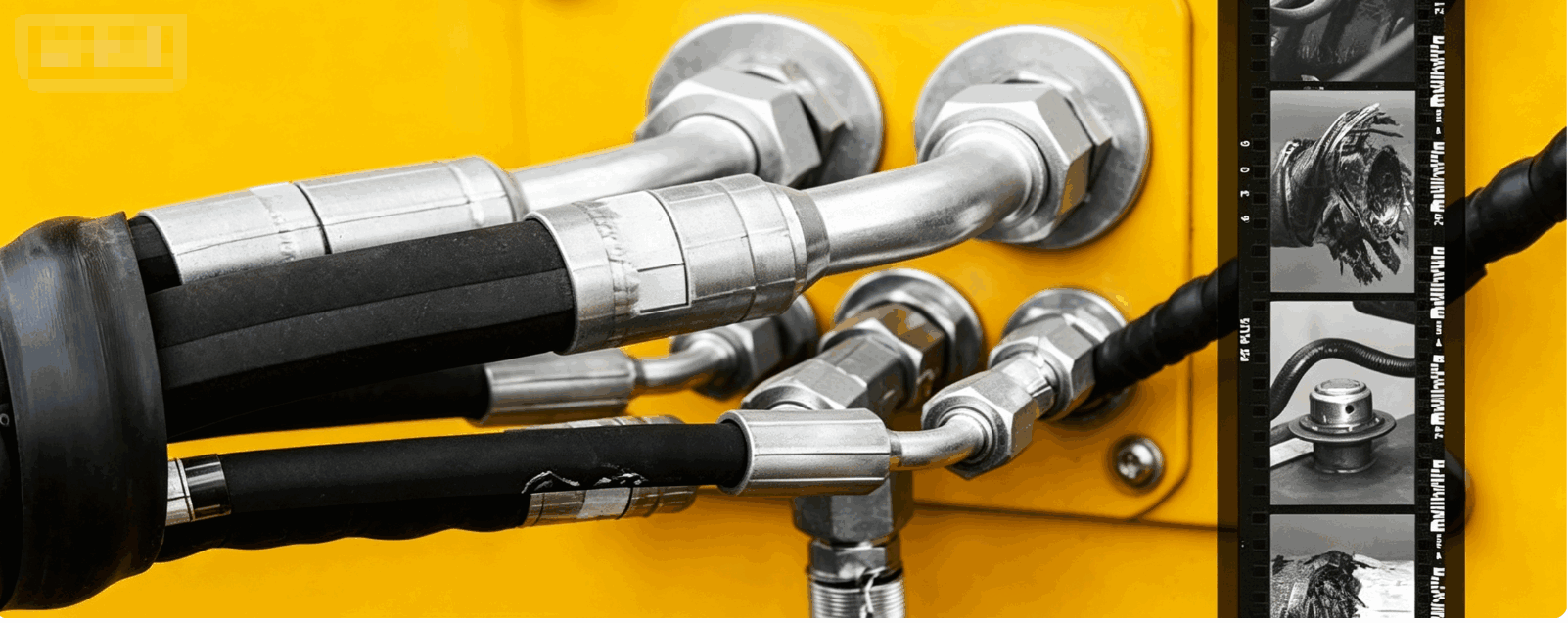
Textile Braided Hydraulic Hose: Top Advantages for Low-Pressure Systems
What Is Textile Braided Hydraulic Hose?
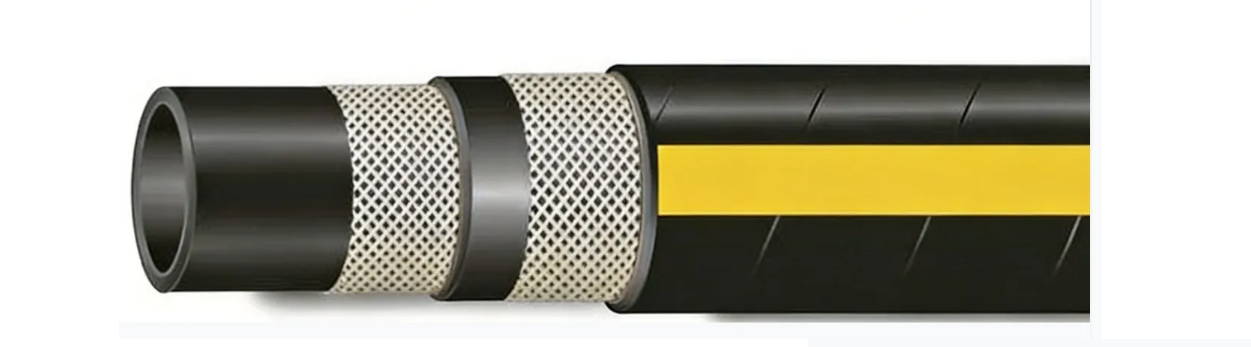
Textile braided hose is a hydraulic or fluid power hose whose reinforcement layer consists of one or more braids of synthetic textile yarn. The inner tube is typically synthetic rubber (nitrile, neoprene, or EPDM) compatible with the fluid. The textile braid provides strength to contain pressure, while the outer cover protects against environmental damage.
Textile braided hoses are often constructed under standards such as:
- SAE 100R5 (single textile braid + one wire braid) – mixed construction
- SAE 100R6 (single textile braid) – all-textile, for low-pressure applications
- SAE 100R7 (thermoplastic tube with textile braid) – medium pressure
- ISO 3949 (thermoplastic with textile braid) – for hydraulic systems
Unlike steel wire, textile fibers do not corrode, are lighter, and offer excellent flexibility.
Top Benefits of Textile Braided Hydraulic Hose
1. Exceptional Flexibility and Small Bend Radius
Textile braided hoses are significantly more flexible than their steel-wire counterparts. The synthetic fibers bend easily without permanent deformation. This results in a much smaller minimum bend radius (MBR)—often 30-50% tighter than equivalent wire-braided hoses.
Benefit in practice: Easier routing in tight engine compartments, articulated joints, and around obstacles. Reduced risk of kinking and exceeding MBR.
2. Lightweight Construction
Steel wire is heavy. Textile fibers are not. A textile braided hose can weigh 50-70% less than a wire-braided hose of the same diameter and length.
Benefit in practice: Lower total machine weight, reduced operator fatigue when handling hoses during maintenance, and lower shipping costs. Ideal for applications where weight matters, such as on-board robotic arms or portable equipment.
3. Corrosion Resistance
Steel wire rusts when the outer cover is damaged and moisture reaches the reinforcement. Textile fibers are completely immune to corrosion. They will not rust, crack from hydrogen embrittlement, or weaken due to saltwater or chemical exposure.
Benefit in practice: Longer service life in marine environments, chemical plants, agricultural fertilizer exposure, and outdoor equipment where covers may get abraded.
4. Lower Cost
Textile materials are less expensive than high-tensile steel wire, and braiding textile yarn requires less energy and simpler machinery. The result: textile braided hoses typically cost 20-40% less than equivalent wire-braided hoses.
Benefit in practice: Significant cost savings for large fleets or for non-critical circuits where wire reinforcement is overkill.
5. Excellent Impulse Fatigue Life at Low to Medium Pressure
For applications with moderate pressure spikes (e.g., return lines, pilot circuits), textile braided hoses offer very good impulse life. The flexible fibers absorb pressure fluctuations without work-hardening (a problem for steel wire over many cycles).
Benefit in practice: Reliable service in cyclic applications like hydraulic press return lines or agricultural implement circuits.
6. Non-Sparking and Dielectric Properties
Textile braided hoses do not contain metal. They are non-sparking and have high dielectric strength (electrically insulating). This is a critical safety feature in environments with flammable vapors, explosive dust, or electrical hazards.
Benefit in practice: Safe use in mining (gassy mines), petrochemical plants, and around high-voltage equipment.
7. Easy to Cut and Crimp (No Special Tools)
Steel wire braid can fray, puncture gloves, and require powerful cutters. Textile braid cuts cleanly with a sharp knife or standard hose cutter. Crimping requires less force, and fittings seal reliably without steel wire ends to protrude.
Benefit in practice: Faster assembly, lower tooling cost, and safer field repairs.
8. Compatibility with a Wide Range of Fluids
Depending on the tube compound, textile braided hoses handle mineral oils, synthetic esters, water-glycol, air, water, and even some chemicals. They are often the preferred choice for low-pressure return lines and suction lines where steel wire is unnecessary.
Comparison: Textile Braid vs. Steel Wire Braid (Single Braid)
| Feature | Textile Braided (e.g., SAE 100R6) | Steel Wire Braided (e.g., SAE 100R1AT) |
|---|---|---|
| Pressure rating (typical) | 300 – 1,000 psi | 1,800 – 3,000 psi |
| Minimum bend radius | Very tight (e.g., 2″ for ½″ ID) | Moderate (e.g., 3.5″ for ½″ ID) |
| Weight per foot | Very light | Heavy |
| Corrosion resistance | Excellent (none) | Poor (rusts) |
| Cost | Low | Higher |
| Spark/arc risk | None (non-conductive) | Conductive (spark risk) |
| Flexibility | Excellent | Good |
| Typical applications | Return lines, pilot lines, drain lines, air, water | Pressure lines, general hydraulic |
Typical Applications for Textile Braided Hydraulic Hose
- Return lines from valves to reservoir (low pressure, high flow)
- Pilot control circuits (low pressure, small diameter)
- Case drain lines from motors and pumps
- Low-pressure hydraulic tool lines (e.g., hydraulic torque wrenches)
- Air brake hoses on trucks and trailers (SAE J1402)
- Water or coolant lines on industrial machinery
- Agricultural implement hydraulic circuits (low-pressure remote couplers)
- Lubrication oil lines
Limitations to Know
Textile braided hoses are not suitable for high-pressure applications (typically >1,500 psi, though some SAE 100R7 can go to 3,000 psi). They also have lower abrasion resistance than hoses with thick rubber covers (though textile covers can be reinforced). For extreme impulse at high pressure (>5,000 psi), steel spiral is required.
How to Select the Right Textile Braided Hose
- Determine working pressure – Stay within manufacturer rating.
- Check fluid compatibility – Tube material must match fluid (e.g., EPDM for water/glycol, nitrile for oil).
- Confirm temperature range – Textile hoses typically handle -40°C to +100°C.
- Consider abrasion risk – For harsh environments, choose a hose with an extra-thick cover or add spiral wrap.
- Select appropriate standard – SAE 100R6 for general low-pressure; SAE 100R7 for medium-pressure thermoplastic; SAE 100R5 for mixed textile+wire (higher pressure).
Conclusion
Textile braided hydraulic hoses offer a unique set of benefits: exceptional flexibility, light weight, corrosion resistance, lower cost, and non-sparking safety. While they cannot replace steel-reinforced hoses in high-pressure primary circuits, they are the optimal choice for return lines, pilot controls, drain lines, and many low-pressure applications. By matching the hose reinforcement to the actual pressure and environmental demands, you can reduce costs, simplify routing, and extend system life.
Agricultural Sprayer Hydraulic Hoses: Selection, Routing & Best Practices
Braided vs. Spiral Hydraulic Hoses for Heavy Equipment: A Comparative Guide