Built for the Extreme: How Solid Tires Are Engineered for the Toughest Port and Construction Sites
In the world of heavy industry, equipment is only as reliable as its most vulnerable component. For machinery operating in the world's most punishing environments—from sprawling container terminals to desolate mining pits and chaotic demolition yards—the traditional pneumatic tire is often the weakest link. This is where the specialized solid tire moves from being an option to an absolute necessity. Engineered to withstand what would destroy a standard tire in hours, solid tires for port equipment and construction machinery represent the pinnacle of durability-focused design. This article delves into the specific, extreme challenges of these sectors and explores how advanced solid tire technology is meticulously crafted to not just survive, but thrive under relentless pressure.
The Theatre of Extreme Operations: Where Standard Tires Fail
To appreciate the engineering behind a solid tire, one must first understand the battlefield it is designed for. These are not merely "rough" job sites; they are environments engineered to test material science to its absolute limit.
-
Ports & Logistics Terminals: Here, port equipment like container handlers, reach stackers, and terminal tractors face a unique trifecta of hazards. First, they bear the immense, concentrated loads of shipping containers, requiring extreme static and dynamic load capacity. Second, they operate in a landscape littered with metal debris, container corner castings, and rebar, creating a constant puncture risk. Third, they must do this while performing intricate, precise maneuvers on hard, abrasive asphalt or concrete, often for 24 hours a day.
-
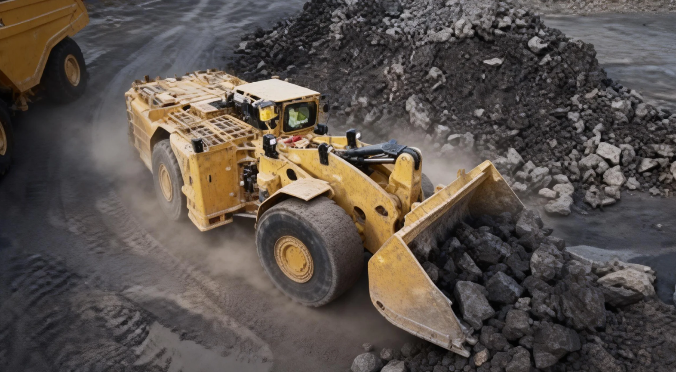
Mining & Quarrying: Beyond just sharp rock, mining environments subject tires to extreme abrasion from crushed stone, chemical exposure from ore and solvents, and frequently, severe temperature fluctuations. The sheer weight of loaded haul trucks demands a carcass that cannot falter.
-
Demolition & Recycling: This is perhaps the most visually punishing environment. Tires here must be impervious to protruding nails, shattered glass, jagged metal, and hot debris. Any air-filled tire is instantly compromised, leading to catastrophic and dangerous failure.
-
Waste Management & Landfills: In addition to puncture hazards, tires in these sites face ozone cracking from methane exposure, chemical degradation from leachates, and the constant challenge of slick, unstable ground conditions.
In these arenas, a flat tire is not a maintenance issue; it is a major operational crisis causing costly downtime, safety risks, and project delays. The solid tire is the engineered solution to eliminate this single point of failure.
Deconstructing the Fortress: How Solid Tires Are Built to Endure
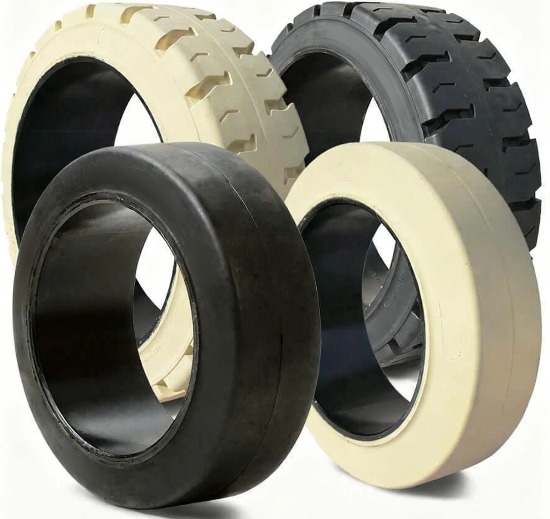
A solid tire is not simply a "tire without air." It is a monolithic structure where every layer and compound is formulated for a specific defensive purpose. Modern engineering focuses on two primary types: Polyurethane Press-On Tires and Solid Rubber Tires, each with sophisticated internal designs.
-
The Layered Defense: Carcass, Cushion, and Tread
-
Inner Core / Carcass: The foundation is a high-density, rigid core that provides the fundamental shape and load-bearing strength. In advanced designs, this may include embedded steel or Kevlar® reinforcement plates for maximum dimensional stability and resistance to shear forces.
-
Cushion Layer (In Bonded Designs): A critical innovation is the inclusion of a bonded cushion layer between the core and the tread. This layer, often made from a specially formulated elastic compound, acts as a shock absorber. It dampens vibrations and impacts, protecting both the equipment and the operator from the harshness of a completely solid structure—a key advancement over early, unforgiving solid tires.
-
Outer Tread: The outer layer is a custom-compounded wear surface. For port equipment, the compound prioritizes high abrasion resistance and stability for precise handling on asphalt. For mining and demolition, the formula emphasizes extreme cut-and-chip resistance and often includes additives to resist oils, acids, and ozone.
-
-
Material Science: The Chemistry of Resilience
The magic lies in the polymer chemistry. Leading manufacturers use proprietary polyurethane (PU) or rubber compounds:-
High-Performance Polyurethane: Offers superior tear strength, load capacity, and resistance to cutting compared to many rubbers. It is the gold standard for port equipment and mining solid tires where sharp impacts are constant.
-
Advanced Rubber Compounds: Formulated with additives like silica, carbon black, and specialized polymers to enhance tensile strength, heat dissipation, and environmental resistance.
-
Beyond "Flat-Proof": The Tangible ROI in Extreme Applications
The value proposition of a solid tire in these environments is calculated not by its purchase price, but by its Total Cost of Ownership (TCO) and risk mitigation.
-
Elimination of Downtime: The core benefit. In a 24/7 port or mine, an hour of lost production can cost tens of thousands of dollars. Solid tires guarantee continuous operation.
-
Predictable Performance and Longevity: Unlike pneumatics that can weaken over time, a solid tire maintains its shape and performance characteristics until the tread is fully worn. This allows for accurate lifecycle forecasting and replacement planning.
-
Enhanced Safety: Eliminating the risk of sudden, explosive blowouts—a genuine danger under heavy loads—creates a safer working environment for operators and ground personnel.
-
Reduced Maintenance Overhead: The complete removal of air pressure checks, puncture repairs, and tire-changing equipment from the maintenance schedule frees up personnel and resources.
Selecting the Right Solid Tire: A Guide for Extreme Duty
Choosing the correct solid tire is a precision task. The wrong compound or design will fail prematurely. Consider this framework:
-
Define the Primary Hazard: Is it cutting (demolition), abrasion (mining haul roads), load intensity (port cranes), or chemical exposure (landfills)? This dictates the required compound.
-
Analyze Load & Speed Profiles: Ensure the tire's load rating exceeds your machine's maximum operating weight. Consider both static and dynamic loads. Speed ratings are also crucial for equipment like terminal tractors.
-
Consult the Specialists: Reputable solid tire manufacturers offer application-specific product lines. A tire engineered for a multi-directional port reach stacker is fundamentally different from one built for a linear-path mining truck.
Conclusion: The Indispensable Asset for Unforgiving Ground
In the relentless arenas of global ports, active mines, and demolition sites, equipment cannot afford to have a Achilles' heel. The specialized solid tire transcends its role as a component to become a foundational element of operational strategy. It is a product of advanced material science and purpose-driven design, engineered to turn catastrophic failure points into bastions of reliability. For fleet managers and operators facing the ultimate test of machinery, investing in the correct solid tire for port equipment and extreme construction is not a purchase—it is a direct investment in unwavering productivity, safety, and bottom-line resilience.
Press-On Solid Rubber Forklift Tires and Press-On Solid Tires: A Comprehensive Guide for Warehouse Managers