The Ultimate Guide to Solid Tires: A Comprehensive Analysis from Core Principles to Global Procurement

How does a block of hardened rubber support tens of tons and operate for tens of thousands of hours in harsh industrial environments? The secret of solid tires lies
not only in the material but also in sophisticated design and continuously evolving technology. When discussing solid vs pneumatic tires, it's crucial to understand this
fundamental difference in construction and philosophy.When you pass by a busy port or a large logistics center, the forklifts carrying massive containers are likely equipped
with black solid forklift tires. They silently bear immense pressure, moving steadily across ground littered with sharp debris, showcasing the unmatched durability of a
solid rubber tire in harsh conditions.
The solid tire market has experienced steady growth in recent years. The global market size is projected to increase from USD 1.123 billion in 2023 to USD 1.602 billion by 2030,
representing a compound annual growth rate (CAGR) of 5.3%, driven by demand across sectors from warehouses to construction.
01 Core Definition and Classification
A solid tire is a specialized solid rubber tire designed as an alternative to pneumatic (air-filled) tires. Its most fundamental characteristic is its solid carcass structure. This design
eliminates the need for a traditional cord ply skeleton, internal air pressure, an inner tube, or an air-retention liner. Sometimes referred to as solid pneumatic tires (highlighting their replacement role),
they are primarily deployed in low-speed, high-load vehicles or mechanical equipment.
Based on material composition, solid tires fall into three main categories: traditional rubber solid tires, polyurethane (PU) solid tires, and emerging elastomeric composite solid tires.
Rubber solid tires represent the most conventional type of solid rubber tires, while polyurethane solid tires are valued in specific applications for their superior load-bearing capacity and wear resistance.
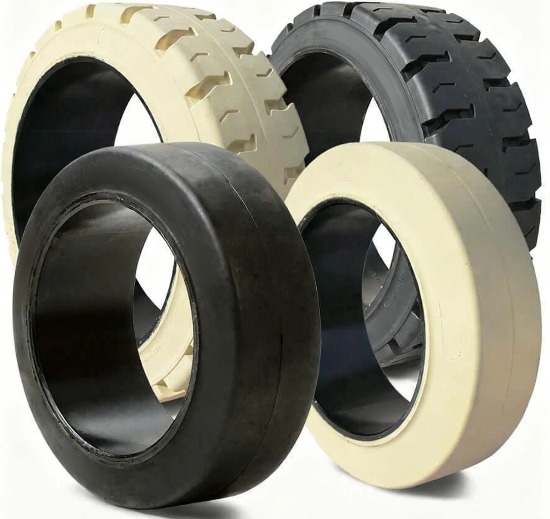
Structurally, solid tires are primarily classified as bonded or non-bonded (press-fit). The debate around pneumatic tires vs solid tires often centers on this structural integrity and the need for zero maintenance.
02 Working Principle and Core Structure
The operating principle of solid tires is fundamentally different. They do not rely on internal air pressure. Instead, the inherent strength and rigidity of high-performance rubber solid tire composites
bear and transmit the load through the entire solid tire body.
Modern high-performance solid tires, including solid forklift tires and solid skid steer tires, typically employ a multi-layer composite construction. This is key for devices like solid skid loader tires
that face extreme stress.
03 Performance Parameters and Key Metrics
Solid tire performance is quantified through specific key indicators like the Load Index and Hardness. The wear resistance of solid tires generally far surpasses that of pneumatic tires. Puncture and
Tear Resistance are defining advantages of the solid rubber tires construction.
Chemical Resistance depends on the compound formula, a critical factor for solid tires for skid steer loaders in tough environments.
04 Comparative Analysis: Solid Tires vs. Pneumatic Tires
The choice between solid and pneumatic tires involves a fundamental trade-off. A Total Cost of Ownership (TCO) analysis reveals that while solid tires have a higher upfront cost, their superior
durability offers long-term savings, a key consideration when choosing fork truck tires solid.
The following operational conditions are highly recommended for solid tires:
-
Port and terminal container handling (using solid pneumatic forklift tires)
-
Scrap yards and waste recycling facilities
-
Construction and demolition sites (utilizing solid tires for skid steer loaders)
-
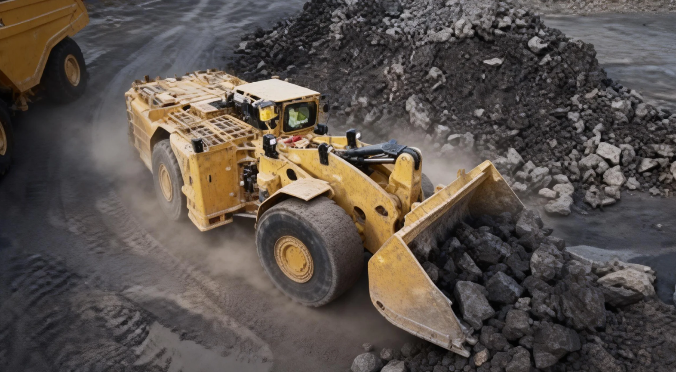
Mining and quarrying operations
-
Environments with extreme temperatures or exposure to chemicals
-
Logistics centers demanding maximum uptime
05 Application Scenarios and Equipment Matching Guide
Solid tires are essential across various industrial sectors. Forklifts equipped with solid forklift tires are the most common application. Industrial trailers and loaders also frequently use solid tires.
Specialized equipment has distinct needs. For example, skid steer solid tires must withstand unique torsional forces, making solid skid steer tires a critical component for machine longevity and performance.
Selection guidelines based on scenario:
-
General Indoor Warehousing: Standard rubber solid tires.
-
Clean Rooms & Sensitive Floors: Non-marking (often polyurethane) solid tires.
-
Oily/Greasy Environments: Oil-resistant compound solid rubber tires.
-
Hazardous/Explosive Areas: Electrically conductive solid tires.
-
Extreme Heavy-Duty Loads: High-hardness polyurethane or reinforced rubber solid tires.
06 Professional Selection and Installation Guide
A systematic approach is vital for selecting the correct solid tire, whether for a forklift or a skid steer. Follow this Five-Step Selection Method. For equipment like solid skid loader tires,
proper Installation is critical for performance and safety.
Identifying High-Quality Products like reliable solid pneumatic forklift tires involves checking craftsmanship, certifications, and test data.
07 Maintenance, Troubleshooting, and Maximizing Lifespan
While "maintenance-free," proactive care extends the life of any solid tire. This is especially true for high-stress applications like solid tires for skid steer equipment.
Maximizing Lifespan – Best Practices apply to all solid rubber tires, ensuring you get the most from your investment.
08 Industry Trends and Technological Innovation
The solid tire industry is evolving rapidly. Advanced Materials and Smart Tire Technology are shaping the next generation of solid tires, promising even greater efficiency for all applications,
from solid forklift tires to solid skid steer tires.
09 Global Procurement Essentials (For International Buyers)
Navigating the global supply chain for solid tires requires attention to key details. Evaluating a Chinese Manufacturer/Supplier thoroughly is essential for sourcing quality solid tires,
rubber solid tires, or specialized solid skid loader tires.
Logistics and Service Agreements must be clear when importing solid tires or solid pneumatic tires to ensure a smooth supply chain.
Press-On Solid Rubber Forklift Tires and Press-On Solid Tires: A Comprehensive Guide for Warehouse Managers
What Are Solid Tires and Why You Should Consider Them?