Skid Steer Solid Tires Slipping? 3 Key Fixes for Immediate Grip
Your choice of solid skid steer tires was made for durability and to eliminate costly downtime from punctures. However, a new frustration often emerges: unexpected slippage, poor traction, and a lack of control, especially on common surfaces like wet concrete, loose dirt, or inclines. This loss of grip doesn't mean solid tires are inherently flawed. Instead, it signals a mismatch between the tire's design, the operating conditions, and machine handling. This guide cuts through the frustration, explaining the "why" behind the slip and providing three actionable, high-impact improvements you can implement to regain control and productivity immediately.
Why Do Solid Tires Slip More? The Traction Trade-Off
To fix the problem, you must first understand it. The very features that make solid skid steer tires excellent for durability create challenges for traction:
-
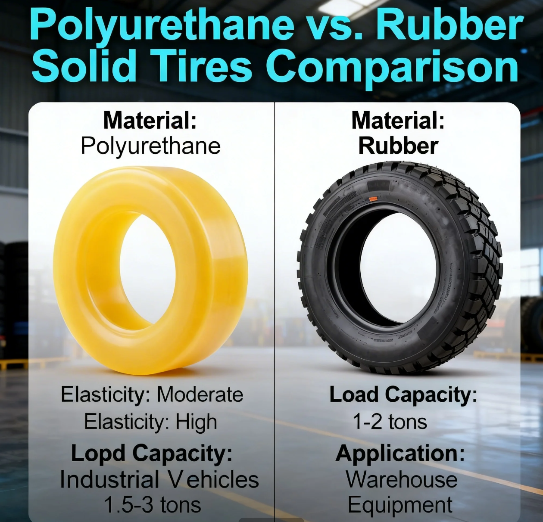
No Cushioning, Less "Bite": Pneumatic tires flex, allowing the tread to conform to and wrap around surface irregularities. Solid tires, whether polyurethane or solid rubber, are rigid. They sit on top of the ground rather than digging into it, reducing the mechanical grip of each lug.
-
Harder Tread Compounds: The compounds used in many standard solid tires prioritize long wear and cut resistance over softness. A harder compound has less inherent "stickiness" or adhesion, particularly on smooth, hard surfaces.
-
Weight and Inertia: Solid tires are significantly heavier. While this can aid downward force, it also increases rotational inertia, making it harder for the tires to stop spinning once they break traction.
The good news is that by strategically addressing tire selection, maintenance, and operation, you can dramatically mitigate these inherent factors.
Fix #1: Choose the Right Tread Pattern & Compound for Your Ground
The most critical, long-term fix is ensuring your tires are engineered for your primary surface. Using a general-purpose tread in specialized conditions is a recipe for slippage.
-
For Mixed Concrete/Dirt & General Use (Most Common): A moderately aggressive lug pattern with siping (small razor cuts in the lugs) is ideal. The lugs provide digging force in dirt, while the sipes flex to create multiple biting edges on hard, smooth, or wet surfaces. Look for a softer, high-traction compound specifically formulated for indoor/outdoor use.
-
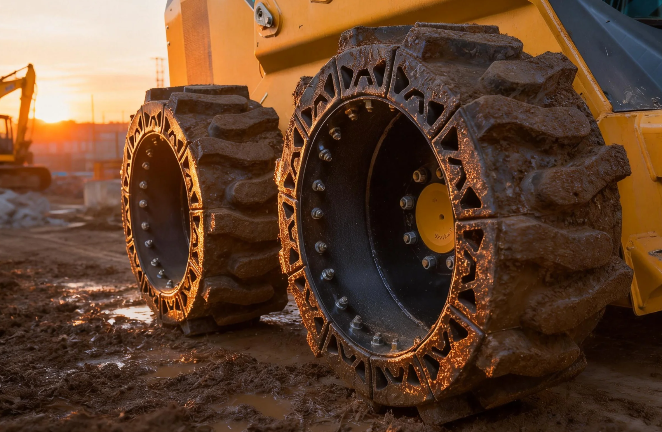
For Primarily Mud, Loose Soil, or Sand: You need an open, deep-lug (cleated) tread. The deep, widely spaced lugs prevent packing with mud (self-clean) and dig down to find firm ground. A more flexible lug design will also help.
-
For Primarily Hard, Smooth Surfaces (Warehouses, Pavement): A ribbed or industrial tread pattern with a high surface area and a soft, non-marking compound provides the best grip. Avoid deep lugs here, as they reduce the contact patch on hard ground.
Actionable Tip: Inspect your current tread. Is it packed smooth with clay? Are the lugs shallow and worn? If so, your tire is fundamentally mismatched to the task. Investing in the correct tread is the single most effective upgrade.
Fix #2: Maximize Traction Through Weight Distribution & Maintenance
Traction is a function of friction, which depends on the coefficient of friction (your tread/compound) and the downward force. You can directly influence the force.
-
Strategic Counterweighting: Adding rear counterweights to your skid steer increases the downward force on the drive tires (typically the rears in a radial-lift model). This is a highly effective, mechanical way to increase grip. Consult your equipment's manual for maximum approved weight.
-
Keep Treads Clean and Sharp: A packed tread is a slick tread. Caked-on mud, clay, or frozen material acts like a lubricated barrier between the rubber and the ground. Make daily cleaning a habit. Furthermore, on hard surfaces, slightly worn tires can sometimes grip better than brand-new, shiny ones, as the compound gets roughed up. However, severely worn, smooth tires must be replaced.
-
Consider Traction Aids (For Extreme Cases): In some industries, operators use tire chains or bolt-on ice lugs over solid tires for extreme ice or permanent mud. While adding wear, they provide an aggressive mechanical grip that rubber alone cannot.
Fix #3: Master the "Soft Touch" Operating Technique
How you operate the machine is as important as the tires on it. The skid-steer's aggressive turning mechanism is a major cause of induced slippage.
-
Avoid "Joystick Jerking": Abrupt, full-power inputs to the hydraulics will break traction instantly. Practice smooth, progressive control of the drive and lift functions. Ease into movement.
-
Master the Pivot Turn: When turning, especially on hard surfaces, minimize tire scrubbing. Try to execute a "pivot turn" where one side moves forward and the other backward, rather than forcing both sides to skid sideways. This reduces the lateral force that overwhelms traction.
-
Manage Load and Momentum: Carrying a heavy load in the bucket high and forward shifts the machine's center of gravity, lightening the drive tires and causing them to spin. Travel with loads low. Don't try to power up steep grades from a standstill; use a controlled, steady approach.
The table below summarizes these three key fixes for quick reference:
| Fix Category | Primary Goal | Key Actions & Upgrades |
|---|---|---|
| #1: Tire Selection | Optimize the contact patch for your surface. | Select a tread pattern for your dominant ground (lug, rib, deep-cleat). Choose a softer, high-traction compound. |
| #2: Machine Setup | Increase downward force on drive tires. | Add approved rear counterweights. Religiously clean packed treads. Use chains for extreme conditions. |
| #3: Operator Technique | Minimize forces that break traction. | Use smooth, progressive control inputs. Perfect the pivot turn to reduce scrubbing. Travel with loads low. |
Conclusion: A Systematic Approach to Regaining Grip
Slippage with solid skid steer tires is not an unavoidable flaw; it is a solvable engineering and operational challenge. The solution lies in a systematic approach: First, audit your equipment, ensuring the tread pattern and compound are purpose-built for your most common surface. Second, optimize the machine with strategic counterweighting and disciplined tread maintenance. Finally, refine the operator's technique to work in harmony with the tires' characteristics.
By implementing these three targeted fixes, you transform your skid steer from a slipping, struggling machine back into a productive, controlled powerhouse. You preserve the legendary uptime of solid tires while finally conquering the grip issues that have held you back.
Urethane vs. Rubber Solid Tyres: A Technical Deep Dive
The Ultimate Guide to Flat-Proof Skid Steer Tires: Airless, Solid Fill & Beyond