The Ultimate Guide to Flat-Proof Skid Steer Tires: Airless, Solid Fill & Beyond

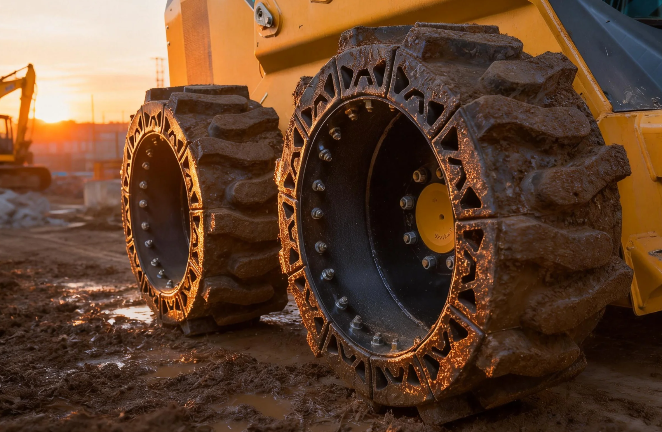
For skid steer operators, downtime is the enemy. A single flat tire can halt productivity, incur costly service calls, and pose a safety risk. This has driven the widespread adoption of flat proof skid steer tires—a category of solutions designed to eliminate punctures entirely. This guide provides a professional breakdown of the leading technologies: solid fill tires and skid steer airless tires, helping you choose the right no flat skid steer tires for your operation.
Why Choose Flat-Proof Tires? The Cost of Downtime
Traditional pneumatic tires are vulnerable to nails, rebar, sharp rocks, and other common jobsite debris. A flat tire on a skid steer doesn't just mean a simple change; it often requires removing the entire machine from service, potentially disassembling the boom or using specialized equipment to lift it. The true cost includes lost labor hours, delayed projects, and repair expenses. Investing in flat proof skid steer tires is an investment in predictable uptime and lower total cost of ownership, transforming your machine into a more reliable asset.
Technology Deep Dive: Understanding Your Options
The term "flat-proof" encompasses several distinct technologies. The two primary solutions are solid fill tires and true skid steer airless tires.
1. Solid Fill Tires (Polyurethane Foam-Filled)
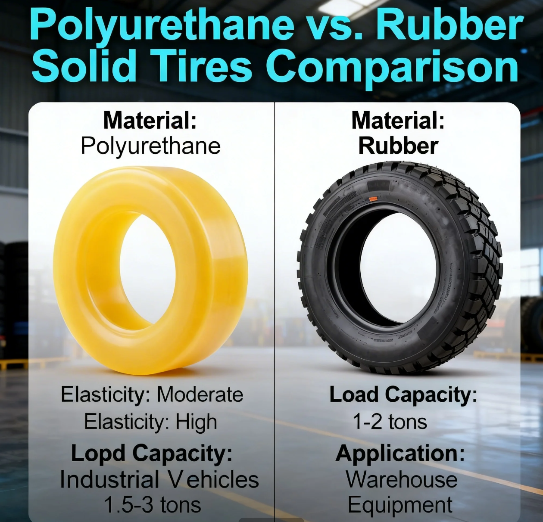
This is the most common and cost-effective no flat skid steer tires solution. The process involves injecting a liquid polyurethane foam into a standard pneumatic tire casing through the valve stem. The foam expands and cures into a solid, elastic core.
-
How it Works: The foam completely replaces the air, creating a solid yet slightly compressible mass. The original tire's tread and sidewall remain, providing familiar traction patterns.
-
Key Advantages: It is significantly less expensive than other airless options and utilizes your existing tire wheels. It provides excellent flat proof security against punctures and is well-suited for a wide range of general industrial and demolition applications.
-
Considerations: Foam-filled tires add substantial weight (increasing fuel consumption slightly) and offer a much firmer ride than pneumatics. The foam can also break down over many years under extreme UV exposure or chemical contact.
2. Airless (or Non-Pneumatic) Tires
True skid steer airless tires represent a more advanced, engineered solution. They are manufactured as a single, solid unit, typically from a dense, resilient polyurethane compound, with no air cavity at all.
-
How it Works: These are one-piece constructs that mount directly onto the wheel. High-end versions may have a designed lattice or geometric structure within the polyurethane to improve shock absorption.
-
Key Advantages: They offer the ultimate in durability and are virtually indestructible under normal operating conditions. They maintain a consistent shape and performance profile indefinitely, with no concern for pressure checks or material degradation. Premium skid steer airless tires are often used in the most extreme environments like scrap metal yards and landfill operations.
-
Considerations: They have the highest initial purchase cost and are the heaviest option. Ride harshness can be pronounced, though premium brands engineer their compounds for better dampening.
The following table provides a clear, at-a-glance comparison to guide your initial assessment:
| Feature | Polyurethane Foam-Filled Tires | Solid Polyurethane Airless Tires |
|---|---|---|
| Construction | Liquid foam injected into a pneumatic tire casing. | A single, molded solid piece of polyurethane. |
| Cost | Moderate (Most cost-effective flat-proof solution). | High (Highest initial investment). |
| Weight | Heavy (Adds significant weight vs. pneumatic). | Heaviest (Can impact fuel efficiency & wear). |
| Ride Comfort | Firm, minimal cushioning. | Very firm; premium models offer improved dampening. |
| Best For | General construction, landscaping, sites with moderate puncture risk. | Extreme environments (scrap yards, demolition, recycling), maximum durability demands. |
Making the Right Choice: A Selection Guide
Choosing between solid fill tires and skid steer airless tires depends on your specific operational and financial parameters. Follow this decision framework:
-
Assess Your Primary Worksite Hazard:
-
Is it general construction debris (nails, wood)? Foam-filled tires are likely sufficient.
-
Is it extreme abrasion and slicing hazards (metal, glass, jagged rock)? Solid polyurethane airless tires are the superior, durable choice.
-
-
Evaluate Your Budget and Machines:
-
For a fleet or tighter budgets, foam filling existing tires offers a fast and economical path to no flat skid steer tires.
-
For new equipment or a long-term investment on a primary machine, the durability of purpose-built airless tires may justify the higher cost.
-
-
Consider Machine Usage and Operator Comfort:
-
For machines running long hours on hard surfaces, the added vibration from any solid fill tires can increase operator fatigue. Weigh this against the productivity gain from zero downtime.
-
If the machine operates on softer ground (dirt, clay), the firmer ride of solid tires is less noticeable.
-
Maximizing the Value of Your Flat-Proof Investment
Even flat proof skid steer tires require proper care:
-
Inspection: While they can't go flat, still inspect the tread and sidewalls regularly for excessive wear, cuts that could snag, or chunks missing from the polyurethane.
-
Load & Speed: Adhere to the tire manufacturer's rated load capacity and speed limits. Overloading can cause premature failure even in solid tires.
-
Chemical Exposure: Be aware that certain chemicals (like strong solvents) can degrade polyurethane over time.
Conclusion: An Investment in Uninterrupted Productivity
The decision to upgrade to flat proof skid steer tires is a strategic move to eliminate one of the most common causes of unscheduled downtime. Foam-filled solid tires provide a reliable and economical entry point, while advanced skid steer airless tires deliver maximum durability for the toughest applications. By carefully evaluating your worksite hazards, budget, and performance needs, you can select the ideal no flat solution to keep your skid steer—and your projects—moving forward without interruption.
Skid Steer Solid Tires Slipping? 3 Key Fixes for Immediate Grip
How Heavy Is A Forklift Tire? Exploring Weight Variations Across Different Models