The Ultimate Guide to Forklift Tire Replacement: Choosing Between Pneumatic and Solid Tires
Understanding Forklift Tire Types
Forklifts primarily use two types of tires, each with distinct characteristics and ideal use cases.
-
Pneumatic Forklift Tires
These are similar to car tires, filled with air to provide cushioning. They are the traditional choice for outdoor and rough-surface applications. A forklift pneumatic tire is designed with a deep tread pattern to provide superior traction on uneven ground, gravel, and debris. The air-filled construction acts as a natural shock absorber, protecting the forklift's mast and internal components from vibration and impact damage. This results in a smoother ride for the operator, reducing fatigue over long shifts. However, a primary consideration with any forklift pneumatic tire is the risk of punctures or flats from sharp objects on the worksite, which can lead to unplanned downtime. -
Solid (Cushion) Forklift Tires
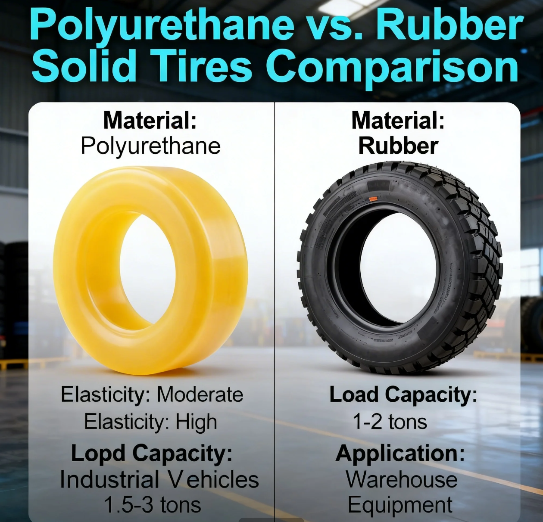
Constructed from solid, durable rubber, forklift tires solid are essentially puncture-proof. They are the go-to solution for indoor applications on smooth, sealed surfaces like warehouse and factory floors. The key advantage of forklift tires solid is their incredible durability and minimal maintenance. There is no air to maintain, and they cannot go flat, ensuring maximum uptime. While they offer less cushioning than their pneumatic counterparts, their solid construction provides excellent stability and load-handling capabilities for high-capacity indoor lifting.
Key Factors in Your Forklift Tire Replacement Decision
When it's time for a forklift tires replacement, consider the following factors to determine the best type for your operation:
-
Operating Environment: This is the most crucial factor. Is your forklift used primarily indoors, outdoors, or both? For smooth, indoor warehouse floors, forklift tires solid are typically the most efficient and cost-effective choice. For rugged outdoor terrains, a forklift pneumatic tire is necessary for its traction and shock absorption.
-
Load Capacity and Stability: Forklift tires solid offer excellent stability for handling very heavy loads on level ground due to their rigid construction. Pneumatic tires can provide stability on uneven ground but may have different load specifications based on inflation.
-
Cost and Maintenance: While the initial cost of a forklift pneumatic tire might be lower, the potential for flats and the need for air pressure checks add to the long-term maintenance. Forklift tires solid have a higher upfront cost but eliminate puncture-related downtime and maintenance, often providing a lower total cost of ownership over their longer lifespan.
-
Operator Comfort: The cushioning effect of a forklift pneumatic tire provides a significantly smoother ride, which is a vital consideration for operator comfort and productivity, especially over long shifts on rough surfaces.
Making the Right Choice
There is no one-size-fits-all answer for the perfect forklift tires replacement. The decision hinges on a careful analysis of your specific working conditions and operational demands.
-
Choose Pneumatic Tires if: Your operations are primarily outdoors or on rough, uneven terrain. You prioritize operator comfort and need superior traction. You are willing to manage the potential for punctures.
-
Choose Solid Tires if: Your operations are confined to smooth, indoor surfaces. Your top priorities are maximizing uptime, minimizing maintenance, and achieving the lowest long-term operating cost. You handle heavy, stable loads on flat ground.
By understanding the fundamental differences between a forklift pneumatic tire and forklift tires solid, you can approach your next forklift tires replacement with confidence, ensuring you select the tire that delivers optimal performance, safety, and value for your business.
The Ultimate Guide to Skid Steer Tires: Snow, Rubber, and Selection
Choosing the Right Skid Steer Loader Tyres