Industrial Tires: The Complete Guide to Types and Selection

What Are Industrial Tires?
Industrial tires are specialized components designed for off-highway machinery operating in demanding environments like warehouses, factories, ports, and construction sites. Unlike standard vehicle tires, an industrial tire is engineered for maximum load capacity, durability against abrasion and impacts, and stability on varied surfaces.
Core Types: Pneumatic vs. Solid
The primary choice lies between two fundamental constructions, each with distinct advantages:
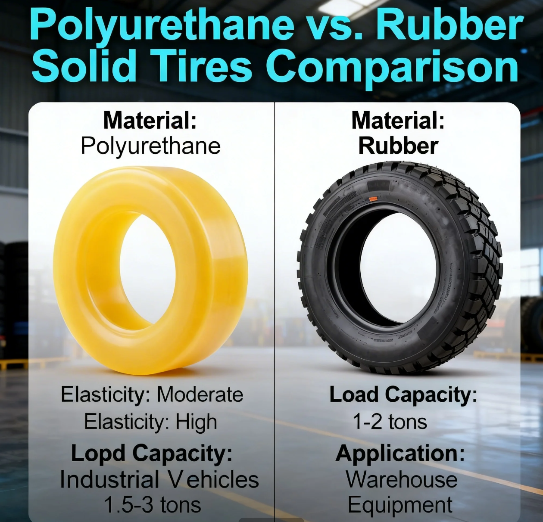
| Feature | Pneumatic Industrial Tire (Air-Filled) | Solid Industrial Tire (Polyurethane/Solid Rubber) |
|---|---|---|
| Ride & Traction | Excellent cushioning and traction on uneven terrain. | Hard ride; best on smooth, hard surfaces. |
| Flat Risk | Susceptible to punctures; requires pressure checks. | 100% flat-proof; ideal for high-debris areas. |
| Best For | Outdoor yards, mixed terrain, applications needing comfort. | Indoor factories, scrap yards, where downtime is critical. |
How to Select the Right Industrial Tire
Follow this focused, three-step process:
-
Analyze Your Environment: This is the most important factor. Is the work primarily indoors on smooth concrete (favoring solid or non-marking tires) or outdoors on rough ground (requiring pneumatic tires with deep tread)?
-
Verify Load Capacity: Check your equipment's manual for the maximum weight per tire. The Load Index on the industrial tire sidewall must meet or exceed this figure. Never compromise on load rating.
-
Consider Total Cost: While solid tires have a higher initial cost, their flat-proof nature can offer savings in high-risk environments by eliminating puncture-related downtime and replacements.
Essential Maintenance for Longevity
-
For Pneumatic Tires: Weekly pressure checks are non-negotiable. Under-inflation causes rapid, uneven wear and is the top cause of premature failure.
-
For All Tires: Conduct pre-shift visual inspections for damage, cuts, or irregular wear.
-
Operate Smartly: Avoid sharp turns at speed and striking curbs to reduce sidewall stress.
Conclusion
Selecting the right industrial tires is a strategic investment. By matching the tire type—pneumatic for versatility and comfort or solid for ultimate durability—to your specific job site conditions and load requirements, you directly enhance operational safety, productivity, and cost-effectiveness.
5 Indicators Telling You When to Replace Forklift Tires
The Ultimate Guide to Skid Steer Tires: Snow, Rubber, and Selection